Turning "how much?" and "link?" comments into orders
"Price?", "link?" and "how do I order?" are the easiest sales under any ad, and the ones most often answered with "DM us". How to answer each on every platform, and when a private message helps.
Guides 5 min read
On this page
Some comments under an ad are hard. These are not. "How much?" "Price?" "Link?" "How do I order?" "Need this in white." Each one is a person telling you, in public, that they want to buy.
They are also the comments most often answered badly: with "DM us for the price", with the same pasted line fifty times, or not at all because nobody saw them until the next morning. This guide covers how to answer each kind so it turns into an order, and how the answer changes on each platform.
Why "DM for price" costs you sales
"DM for price" asks a person who was one tap from buying to open a conversation with a stranger. Some will. Most will not, and the hundred people reading the thread learn that the price is something you would rather not say in public. For a store they do not know yet, that is a reason to be careful.
The rule is simple: if the answer is the same for everyone, say it in public. Price, what is included, the current offer and where to buy are the same for everyone. Private messages are for things that are actually private, like an order number.
Answering "how much?"
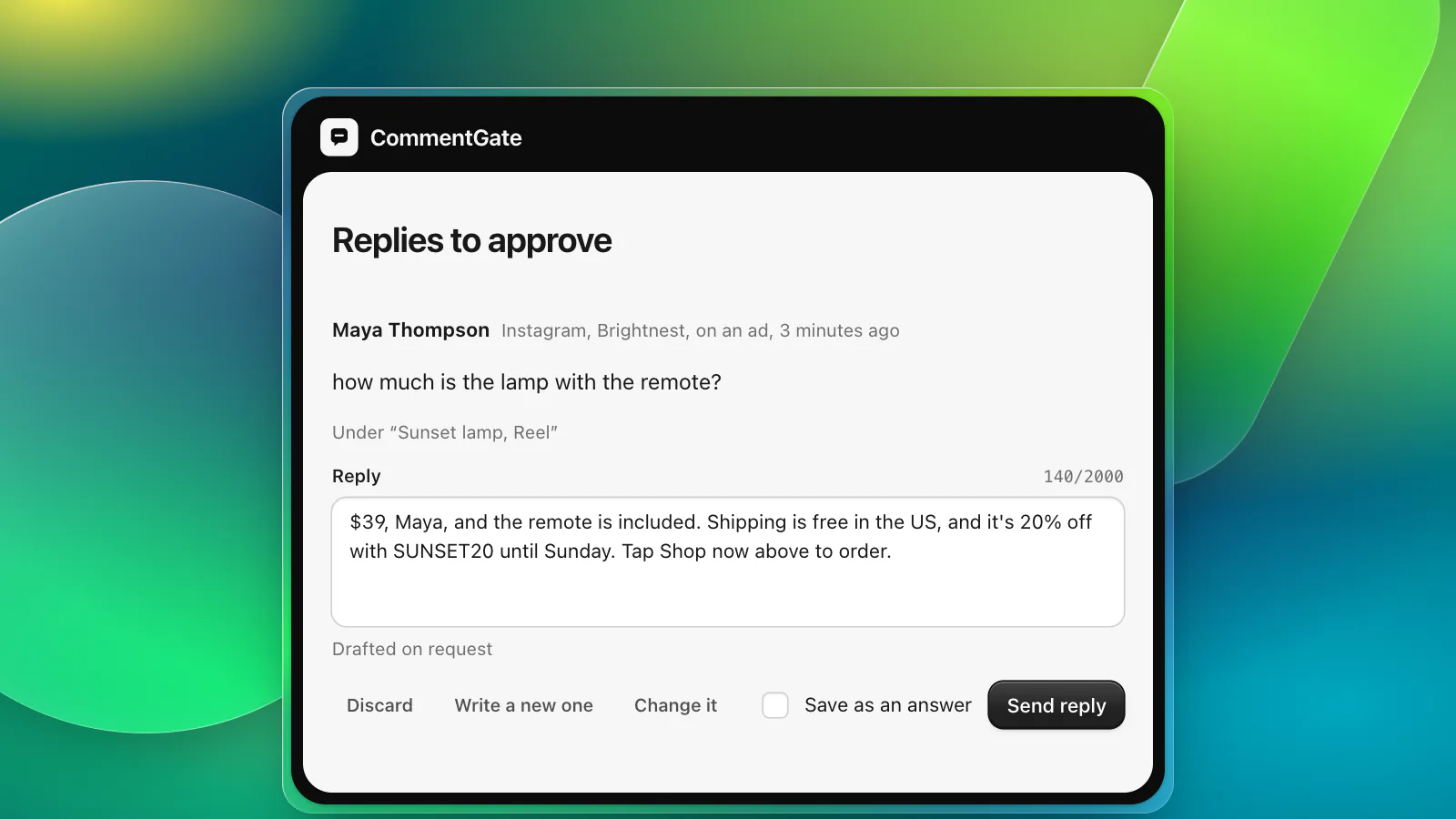
A good price reply has three parts: the number, what the number includes, and how long it lasts.
- "It's $39, Tasha, with free US shipping. The remote is included, and it's 20% off with SUNSET20 until Sunday."
- "$64 for the set of two, Marco. Ships free to Canada on orders over $75."
A few details make the difference:
- Give the currency when your buyers are international. "$39 USD" saves a follow-up question from Canada or Australia.
- Say what is included. Most "how much?" questions are really "how much will I actually pay?". Shipping, the charger, the second unit: say it.
- Put an end date on any offer. An ad keeps collecting readers for weeks. A code with no end date in a reply from three weeks ago becomes a complaint when it stops working.
- Keep the numbers in one place. When prices change, every future answer should change with them.
Answering "link?"
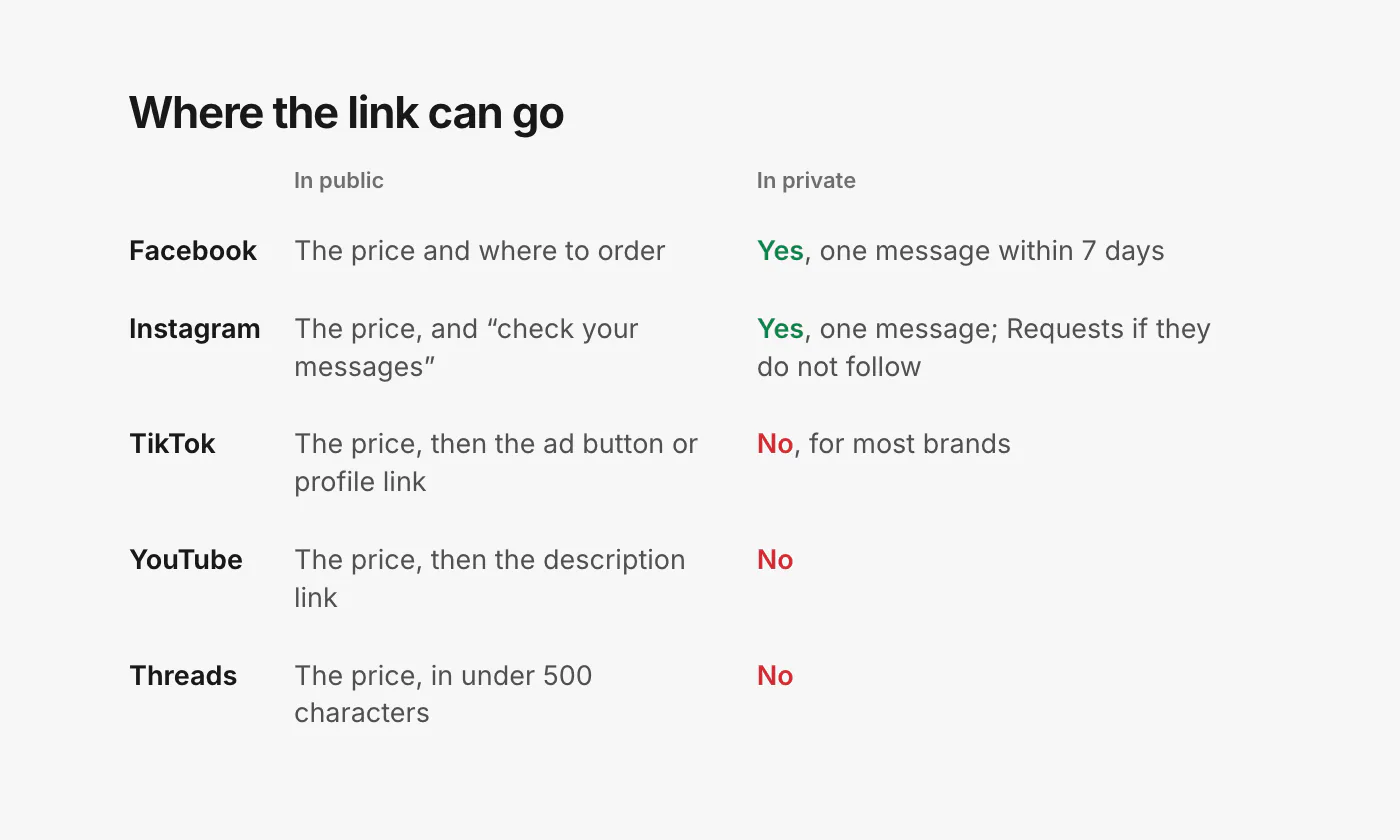
Where the link goes depends on the platform, because each one allows something different.
Facebook and Instagram
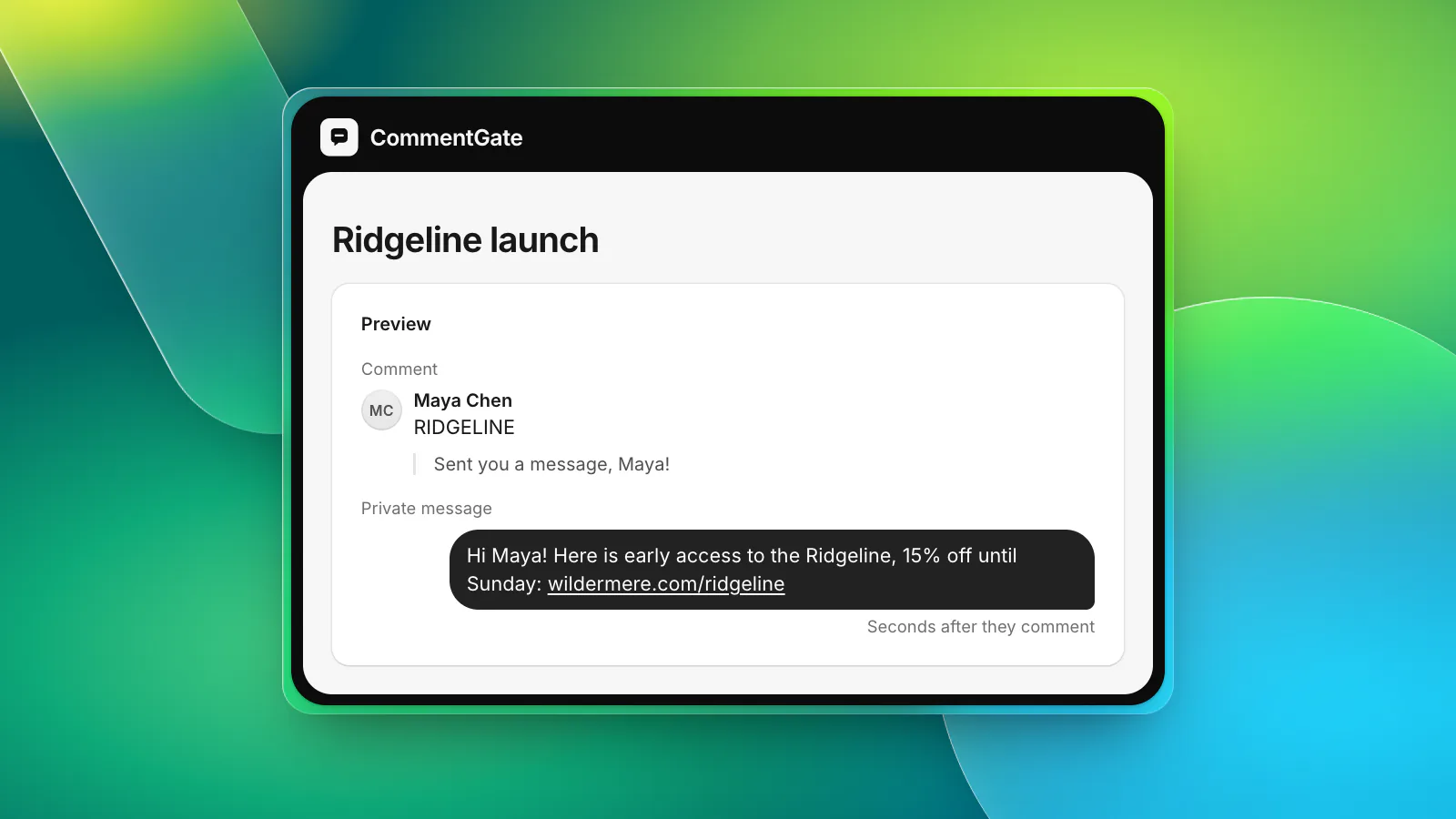
Here you can answer a comment with one private message, and the link can go in it. Meta calls this a private reply. The rules are short: one message per comment, sent within 7 days of the comment, and the conversation can continue only if the person writes back (Messenger private replies, Instagram private replies).
On Instagram, the message lands in the person's Inbox if they follow your account and in their message Requests if they do not. So pair it with a short public reply: "Sent you the link, Maya! Check your message requests." That tells them where to look, and it shows everyone else that asking works. Our comment-to-DM launch playbook covers running this as a campaign with a keyword.
TikTok
For most brands, TikTok does not allow a message from a comment: its comment-to-message option is "only available for Business Accounts registered in Vietnam, Indonesia, and Thailand" (TikTok for Business documentation). Answer in public and point to where the link already is: the button on the ad, or the link in your profile. "It's $39 with free US shipping! Tap Shop now on this video, or the link in our profile."
YouTube and Threads
Answer in public with the price and point to the link in the video description or your profile. On Threads, keep it short: text posts, replies included, are limited to 500 characters (Threads API overview).
"Take my money" and other buying signals
Not every buyer asks a question. "Need this.", "Take my money", "My mom would love this", "Do you have it in white?" and a tagged friend with "we need these" are all people leaning toward checkout. They deserve an answer too, and they are worth keeping track of:
- Answer the implied question. "Need this in white" gets "It comes in white and sand, Leah! Both are $39 and in stock."
- Keep a list of who asked. A person who said "take my money" and did not buy yet is the warmest audience you have. Their name, the ad they commented on and the date are enough to follow up later through the channels you already use.
- Track the link. Add UTM tags to every link you send, so your store analytics can show how many visits and orders came from comment replies.
What loses the sale
- Identical replies. Fifty copies of "Link sent!" under one ad look automated and make people wonder what else is. Keep the facts consistent and vary the wording.
- Slow replies. A price answer that arrives tomorrow reaches someone who already bought elsewhere or forgot.
- Arguing with price objections. "Too expensive" gets one calm line about what is included, or nothing. It does not get a debate.
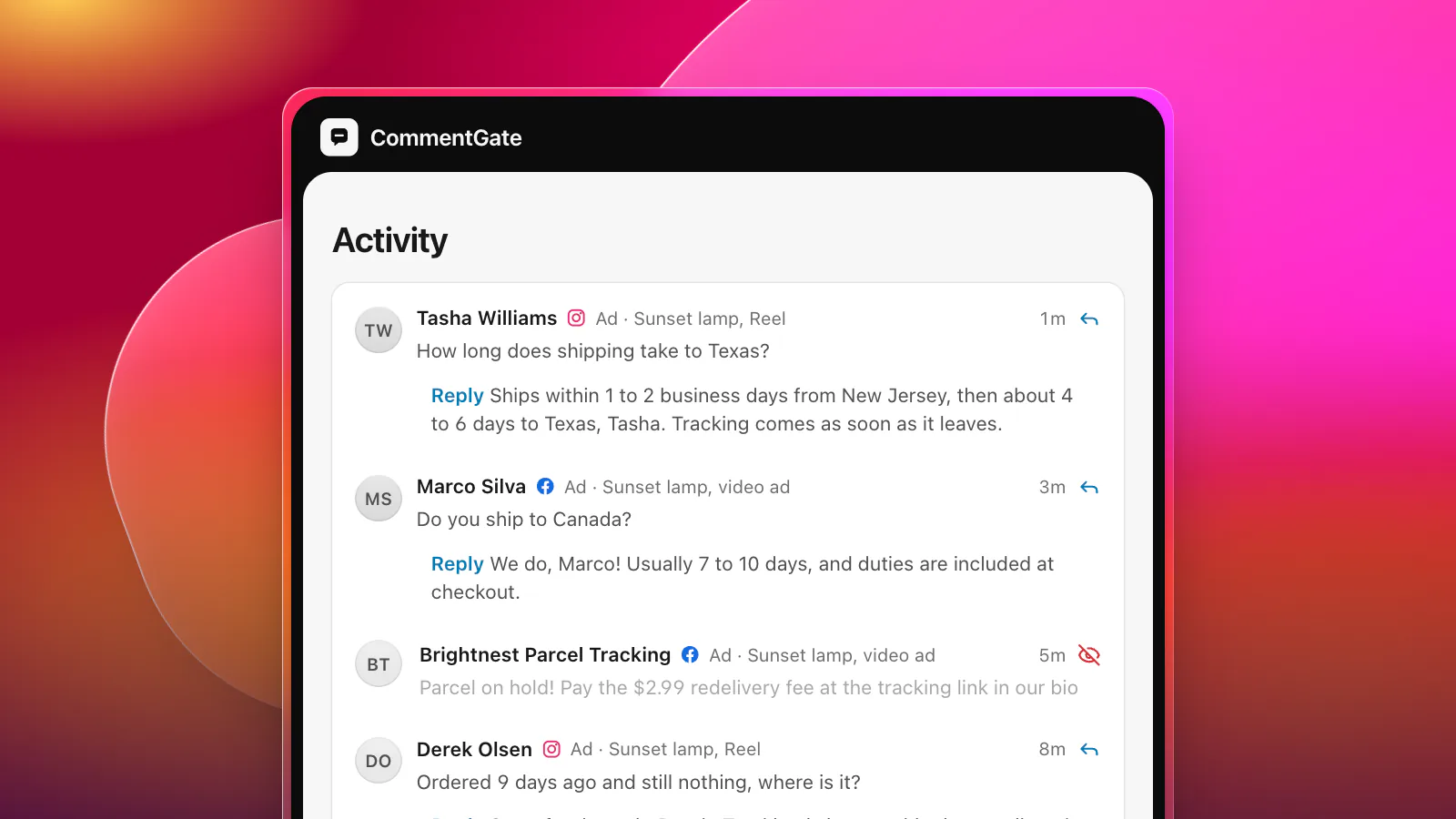
- Leaving lookalike links up. "Same lamp is $4 on another site, link in my bio" under your price reply takes the sale you just earned. Those are competitor plugs or scams, and they should be hidden, not answered.
Doing this at ad scale
A winning ad can bring in hundreds of buying questions a day across Facebook, Instagram and TikTok. CommentGate handles them in three layers:
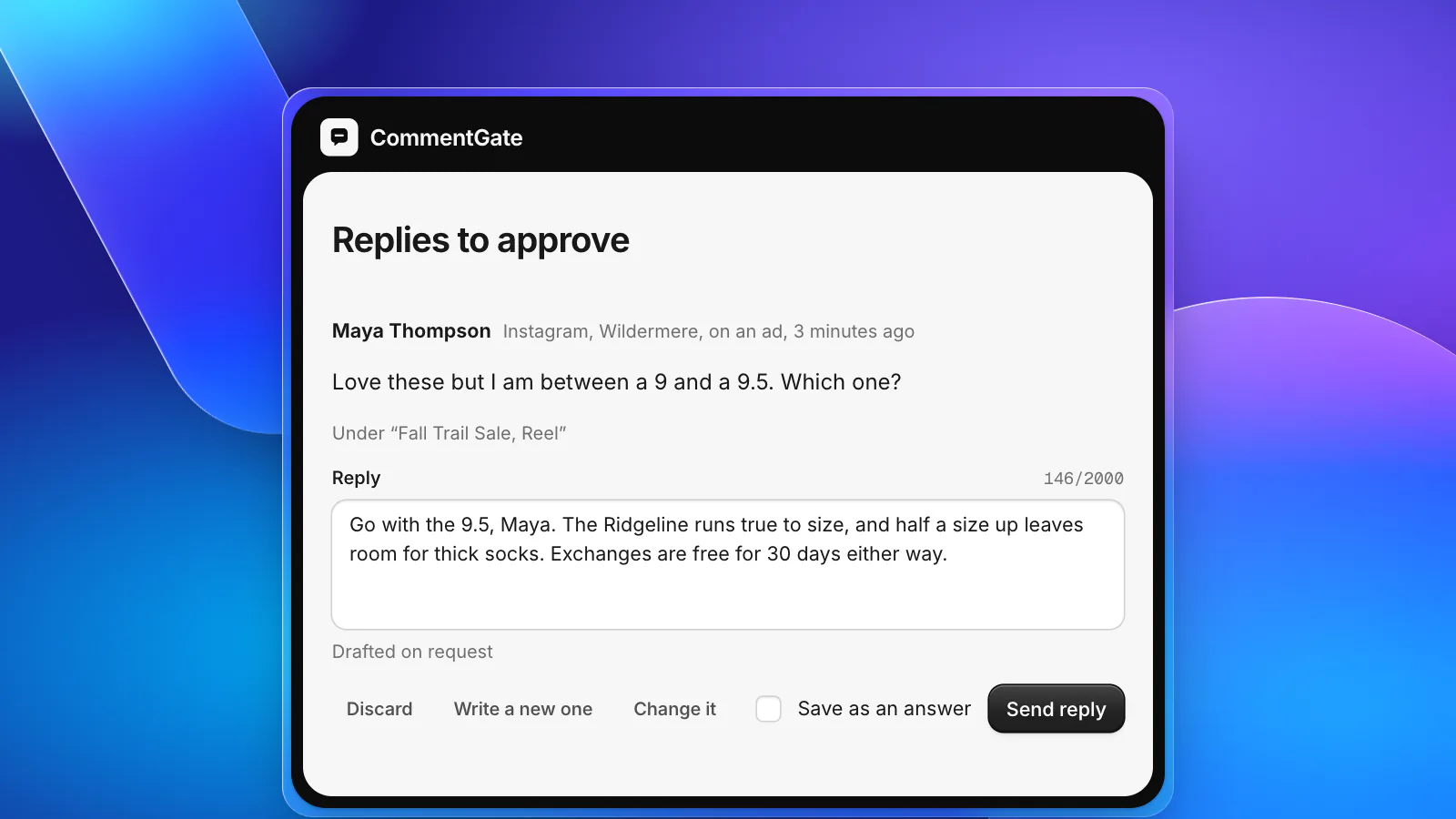
- Drafted answers from your notes. Put your prices, offers and what is included in your notes once. Every "how much?" gets a drafted reply in your voice, in the language it was asked in. Approve each one, or let clear answers go out on their own after a short, varied pause.
- The link in a private message. On Facebook and Instagram, a keyword campaign sends the link in one private message, with your UTM tags added, and a rotating public reply so the thread does not look automated. It is never sent twice for the same comment, and never outside the 7-day window.
- Buyer leads. Comments from people who want to buy, such as "how do I order these in an 11?" or "take my money", are saved as leads with the ad they came from, on every platform. On Facebook and Instagram, they can get your message and link too. Leads can go to Slack, Discord, Zapier, Make or your own webhook, and if your store reports sales back from the tracked link, revenue shows next to the comments that led to it.
Competitor plugs and "cheaper here" links are hidden on their own, so they never sit under your price reply. See the price and discount reply templates for wording, or CommentGate for e-commerce brands for the whole setup.