Negative comments under your ads: when to hide, when to answer, when to leave them
Not every negative comment is a problem, and hiding the wrong one makes things worse. A simple way to sort them: what to hide, what to answer in public, what to leave alone, and the few that need a person.
Playbooks 5 min read
On this page
Negative comments under an ad feel worse than negative comments anywhere else. You are paying to put that post in front of strangers, and the first thing some of them read is someone saying your shoes fell apart. The instinct is to hide everything critical and move on.
That instinct costs more than it saves. Shoppers read comment sections to find out what happens when something goes wrong, and a brand with no visible complaints and no visible answers looks like it is hiding something. The skill is sorting: most negative comments should be answered, a few should be hidden, some should be left alone, and a handful need a real person to decide.
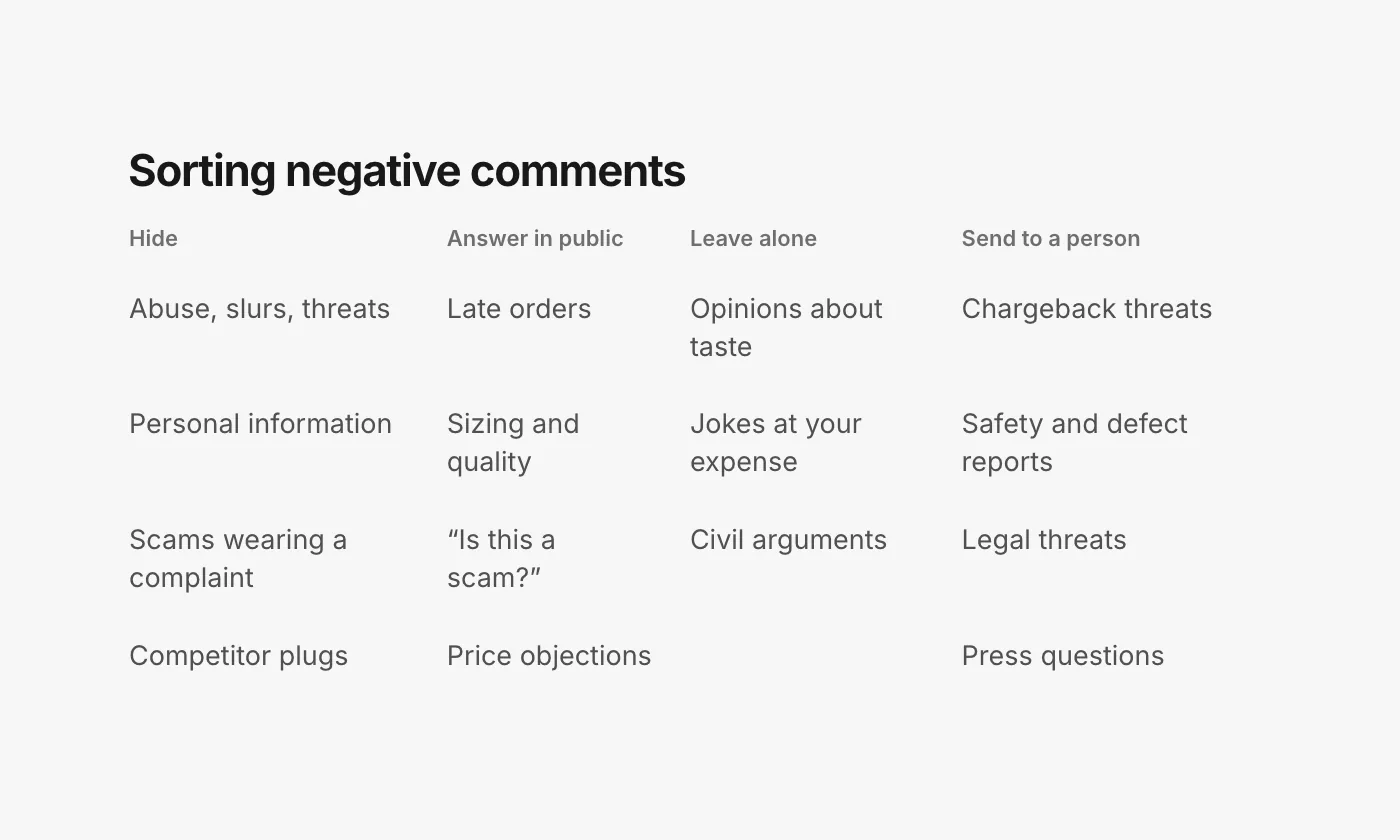
Hide: comments that harm the people reading them
Hide a comment when leaving it up hurts your customers or breaks the rules of the conversation, not when it hurts your feelings.
- Abuse, slurs and threats. Against your staff, your customers or anyone else in the thread.
- Personal information. Someone posting their order number, phone number or home address while complaining. Answer them first, then hide it for their sake.
- Scams wearing a complaint. "Had the same problem, message this account and they will refund you" is a scam reaching for your unhappy customers. So is a fake support account replying under a complaint.
- Competitor plugs. "Mine fell apart too, just buy StrideCo" is marketing, not a review.
- Spam riding the thread. Busy complaints attract link spam like anything else busy does.
On Facebook, hiding keeps a comment visible to the person who wrote it and their friends, and hidden for everyone else (Facebook Help: hide a comment). On Instagram, the writer is not told it was hidden (Instagram Help: hide comments). On TikTok, other people's comments are hidden, not deleted (TikTok, delete a comment). Hiding is quiet everywhere, which is why it is the right tool for these, and why it is the wrong tool for honest criticism: a real customer who notices their complaint is gone usually comes back angrier.
Answer: fair complaints and hard questions
Most negative comments under an ad belong here. They come from people who bought, or nearly did, and they are read by people deciding whether to.
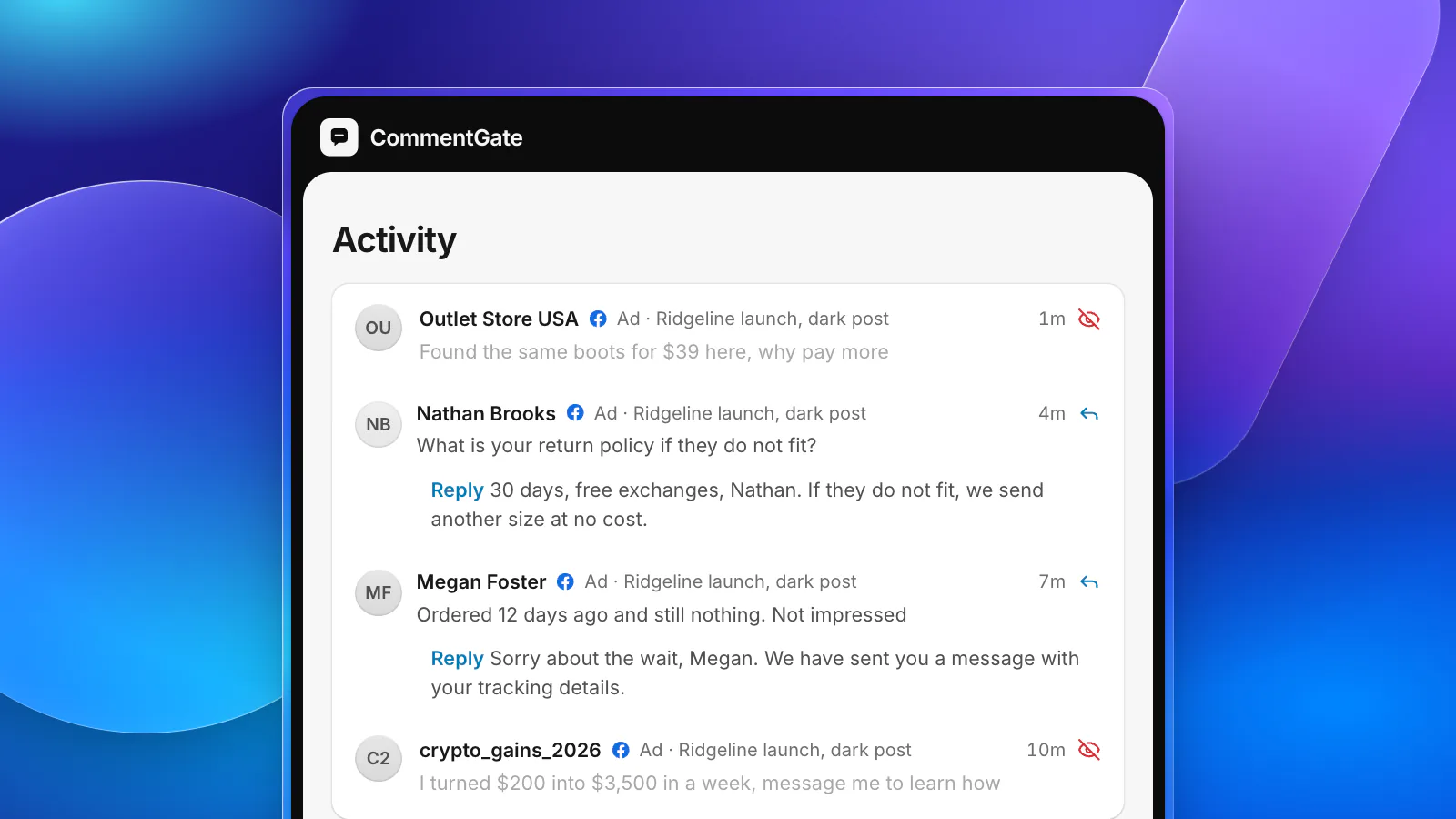
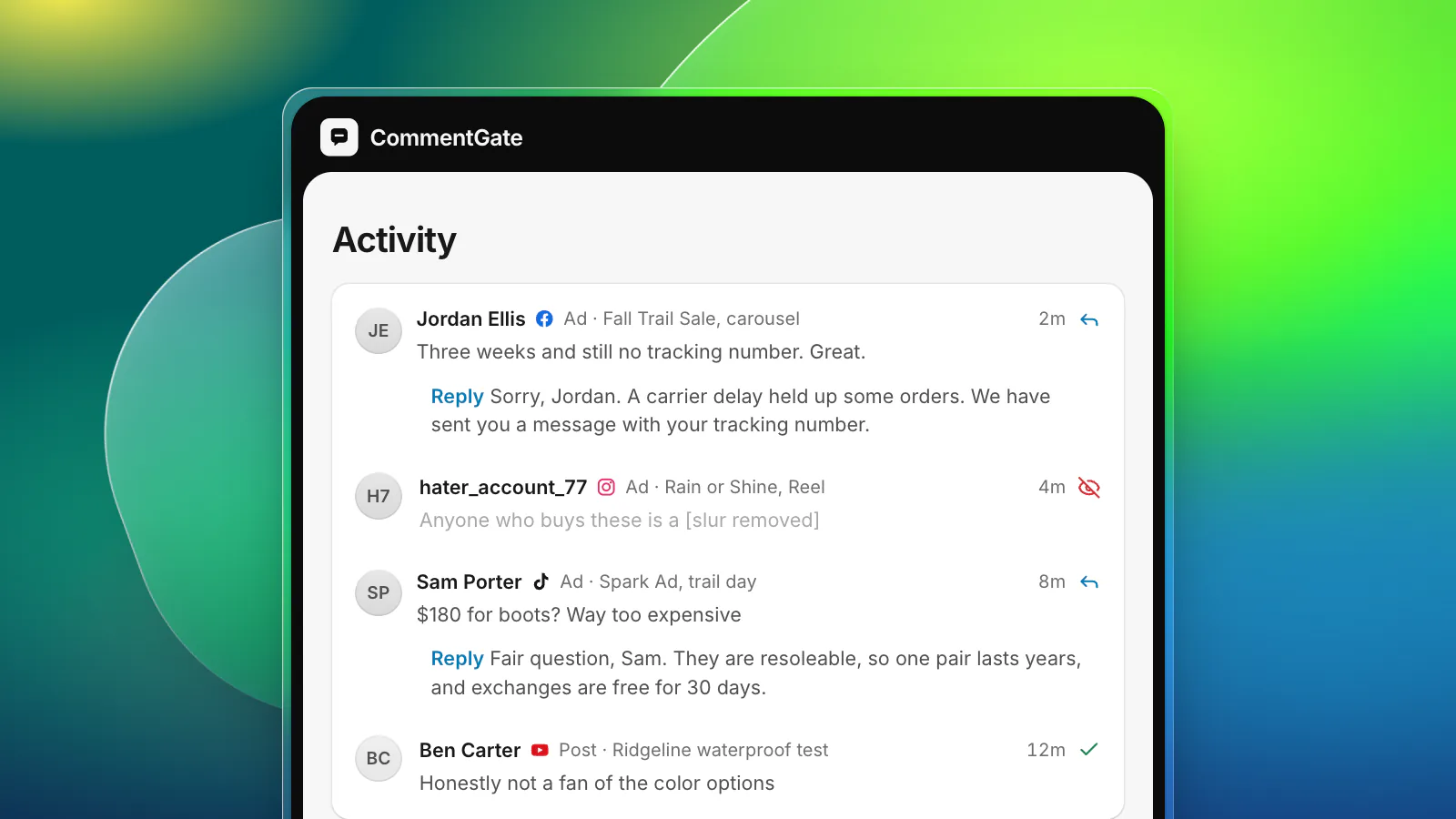
- A late or missing order. "Three weeks and nothing, great." Apologize once, give the real reason if you know it, and move the details to a private message.
- Sizing, fit and quality complaints. "Ran a full size small for me." This is useful to every future buyer. Thank them, say what you recommend, and mention your exchange policy.
- "Is this a scam?" Answer it warmly and specifically: where you are based, how long you have shipped, how returns work. It is one of the most valuable comments an ad can get (answering "is this legit?").
- Price objections. "Way too expensive for what it is." Say briefly what the price buys, without arguing.
A good public answer is short, specific, and written for the next reader as much as the person who complained. Three habits help:
- Answer fast. A complaint answered within the hour reads as attentive. The same answer two days later reads as damage control.
- Take it private, but say so in public. "Sent you a message with the tracking details, Jordan" tells every reader it is being handled. On Facebook and Instagram, a private reply is one message within 7 days of the comment (Meta: private replies, Instagram private replies).
- Never argue. One calm answer. If they reply angrily, the second answer is the same fact, even calmer, or nothing.
On Instagram, write the reply before anything nearby gets hidden: you cannot reply to a hidden comment (Meta: IG comment replies).
Leave alone: opinions and banter
Some negative comments need nothing from you.
- Taste. "Ugliest boots I have ever seen." Someone else will disagree with them within the hour.
- Jokes at your expense. Unless they cross into abuse, a light reply or no reply both work. Deleting a joke is how it becomes a screenshot.
- Civil arguments between other people. If two commenters are debating whether your boots are worth it and nobody is being abusive, that is engagement you are not paying extra for.
Leaving these up is a signal in itself: you are confident enough to let people have opinions.
Send to a person: the real judgement calls
A few negative comments are not moderation questions at all. They are customer service, legal or safety questions that happen to be written in a comment box. Nothing automatic should decide them, whether it is a keyword filter, an agency freelancer on night shift or a tool.
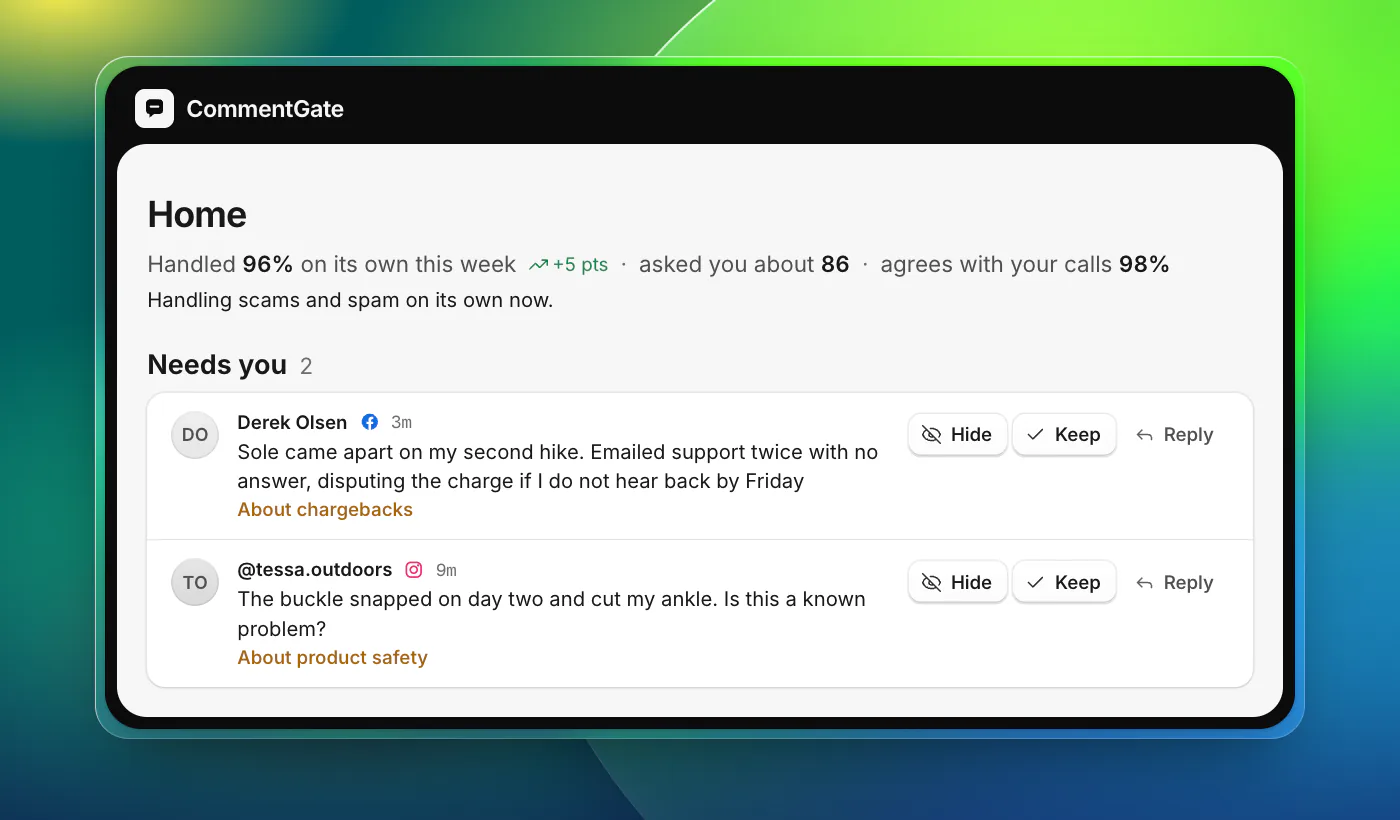
- Chargeback threats. "Sole came apart on my second hike. Emailed support twice, disputing the charge if I don't hear back by Friday." Hiding it can turn a dispute into a public fight; answering it wrong can cost you the dispute. Someone who can see the order should reply.
- Defect reports that may be a safety issue. "The buckle snapped and cut my ankle." This may need to go to whoever handles product quality, and the public answer needs care.
- Legal threats and anything that mentions a lawyer or a regulator.
- Press questions. A journalist asking about a complaint thread under your ad.
For these, the right workflow is: see it quickly, decide quickly, and make sure the answer comes from someone with the facts.
Watch for pile-ons
One negative comment is a customer. Fifty in an hour is an event: a shipping delay that hit everyone, a product problem, a post that went viral for the wrong reason. The rules above still apply, but the pace changes. Pause the ad if the ad itself is the problem, post one clear update, answer the questions with that update, and keep hiding only what is abusive. Our crisis-day checklist covers that day step by step.
How CommentGate sorts them
CommentGate reads every comment on your posts and ads across Facebook, Instagram, TikTok, YouTube and Threads, and sorts negative comments the same way:
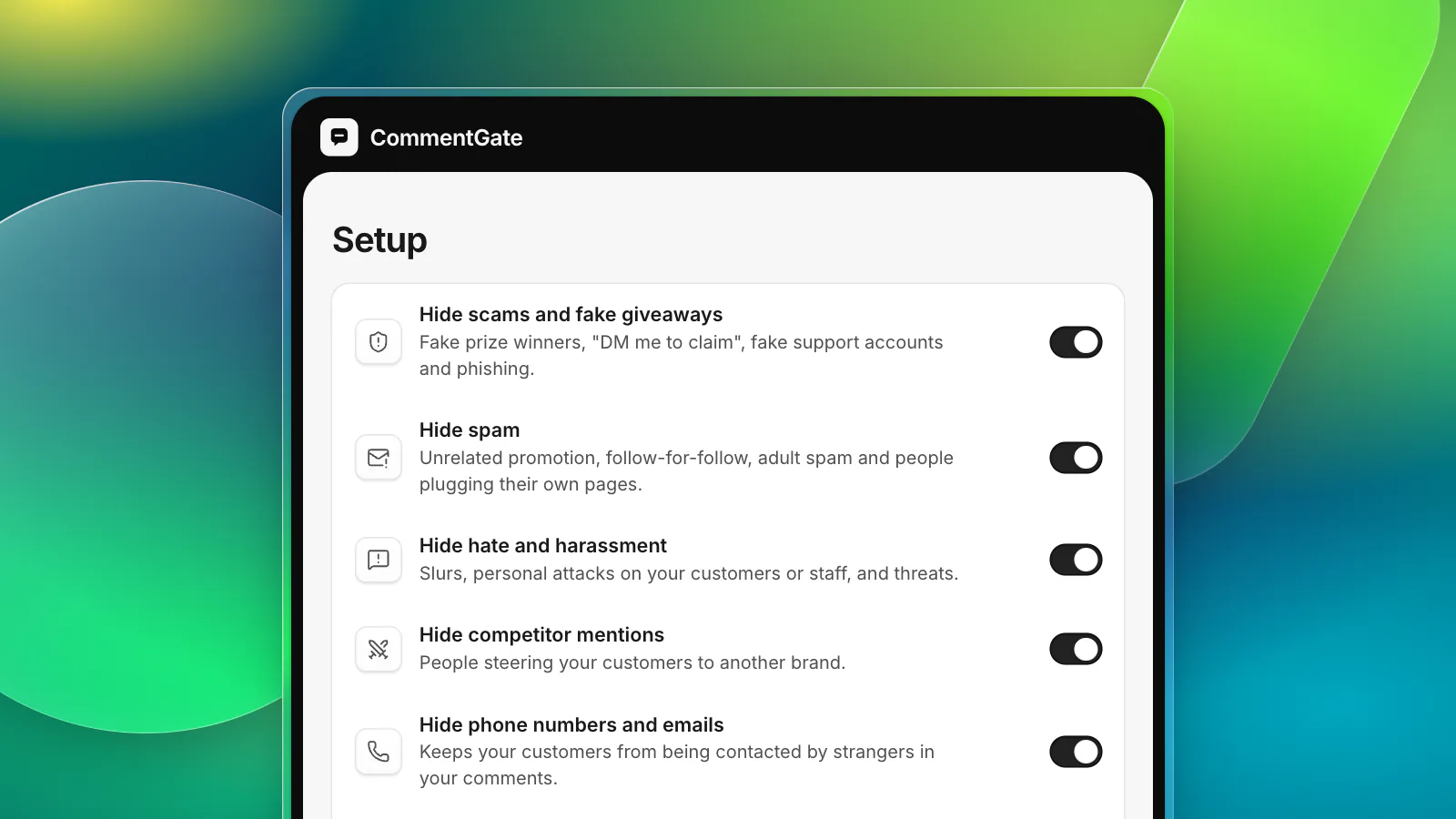
- Hidden on their own: hate, threats, scams, spam and competitor plugs, which are among the switches on from the start. Personal information is hidden once you turn on the switch for phone numbers and emails.
- Answered on their own: fair complaints and hard questions get a drafted reply in your voice, using your shipping and returns notes. You approve each draft, or let clear answers send once you trust them.
- Left alone: opinions and banter stay up. The switch to hide negative comments is off by default, and most brands never turn it on.
- Brought to you: chargeback threats, defect reports, legal threats and press questions wait in Needs you, each with a one-line reason and Hide, Keep and Reply buttons.
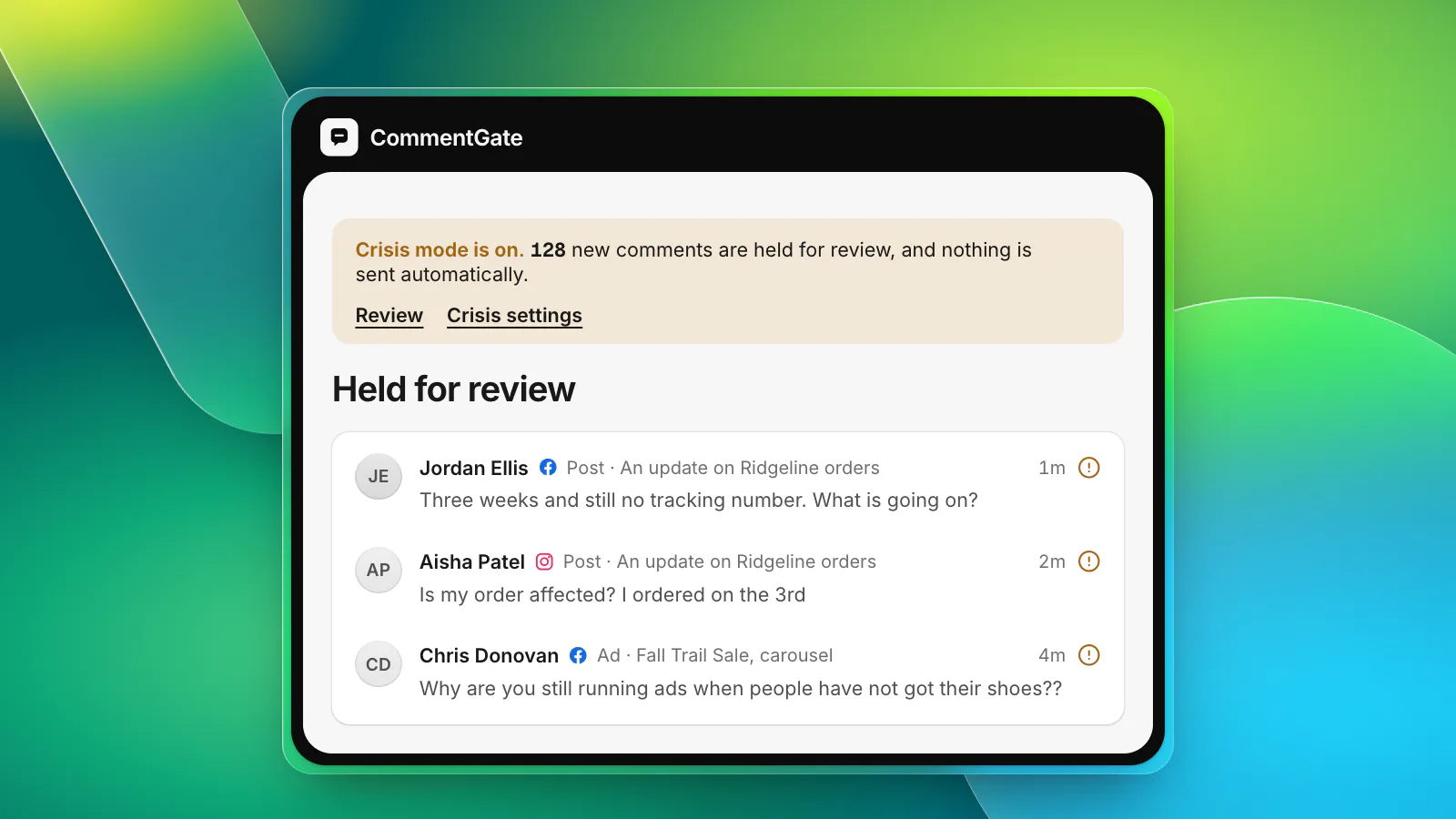
Every choice you make there teaches it, so the kind of complaint you always keep stops being asked about. On a bad day, crisis mode holds every new comment for a person until you turn it off.
Write the sorting down for your team with the comment guidelines template, or see how answering beats closing comments.
Sources
- Facebook Help Center: Hide a comment from a post on your Facebook Page
- Instagram Help Center: Hide comments or message requests you don’t want to see
- Meta for Developers: Private replies (Messenger)
- Meta for Developers: Private replies (Instagram)
- Meta for Developers: IG Comment replies
- TikTok API for Business: Delete a comment