Pre-orders, back-in-stock and sold-out comments: what to say and when
Selling out is a good problem until the comments fill with "restock when?" and "where is my pre-order?". What to say before, during and after a sellout, and what the rules expect of a pre-order date.
Playbooks 5 min read
On this page
Stock changes faster than comment sections do. An ad that was selling a product on Monday is still collecting "I'll take two!" on Wednesday, after the last unit went. A pre-order announced for October is still being asked about in November. And the first hour after a restock brings the most eager buyers you will see all month, along with the people who want to exploit them.
The words you use at each of these moments decide whether the interest turns into orders or into complaints. This playbook goes through them in order.
While it is selling fast
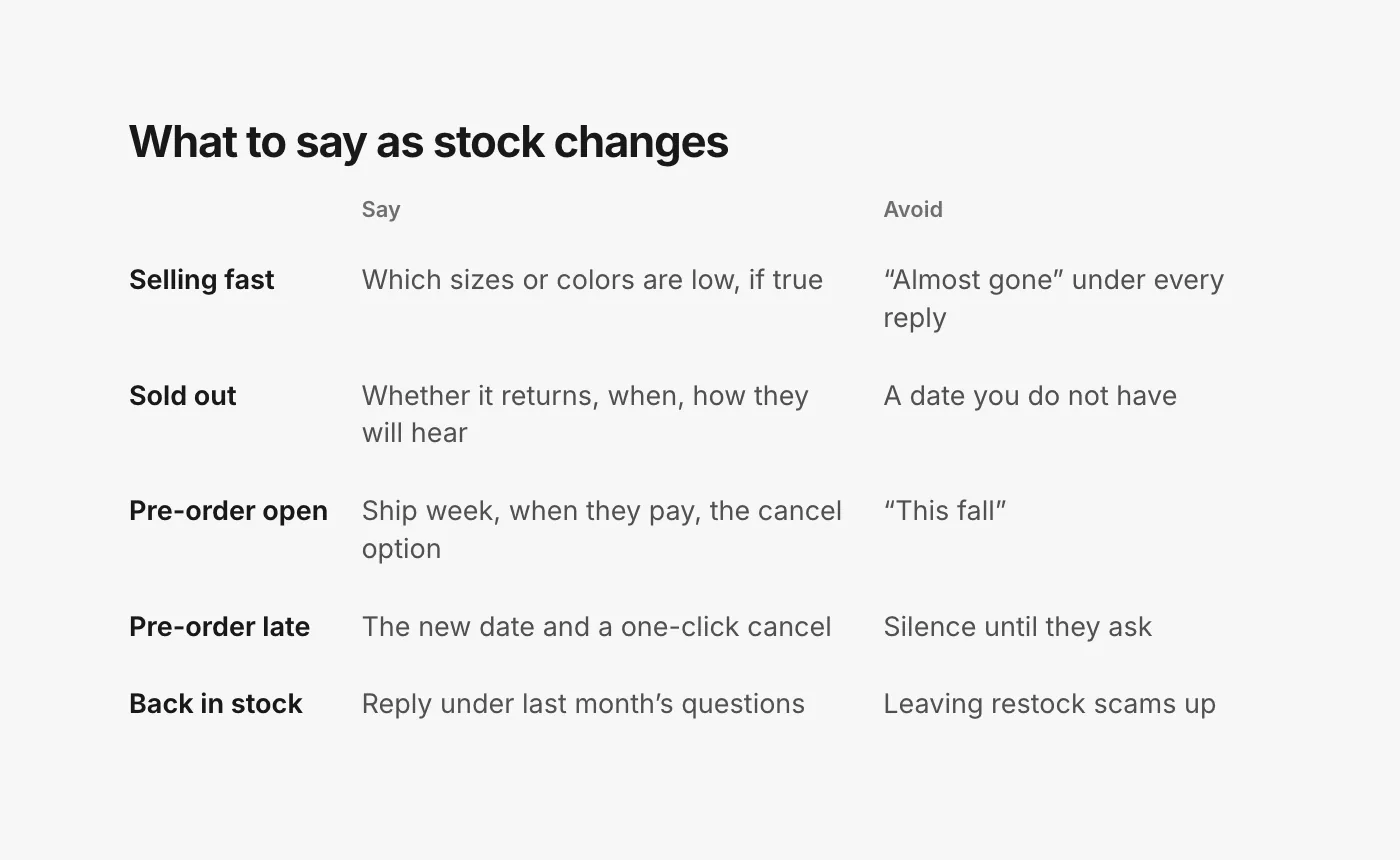
"Only a few left!" is the most tempting reply in e-commerce. Say it only when it is true, and prefer the specific version: "The moss green in 9 and 10 is nearly gone; other sizes are fine for now." A specific answer helps the buyer choose. A general one, repeated under every question, trains people to ignore it.
This is also the moment to write down what you will say when it sells out, because once it does, you will be answering the same question a hundred times.
When it sells out
The first thing to do is not in the comments at all. Pause or edit any ad still pointing at a product people cannot buy. It is paying to bring in comments you can only disappoint. Then answer the questions that are already there.
"Is it coming back?" needs three things: whether it is, when (only if you know), and how they will hear.
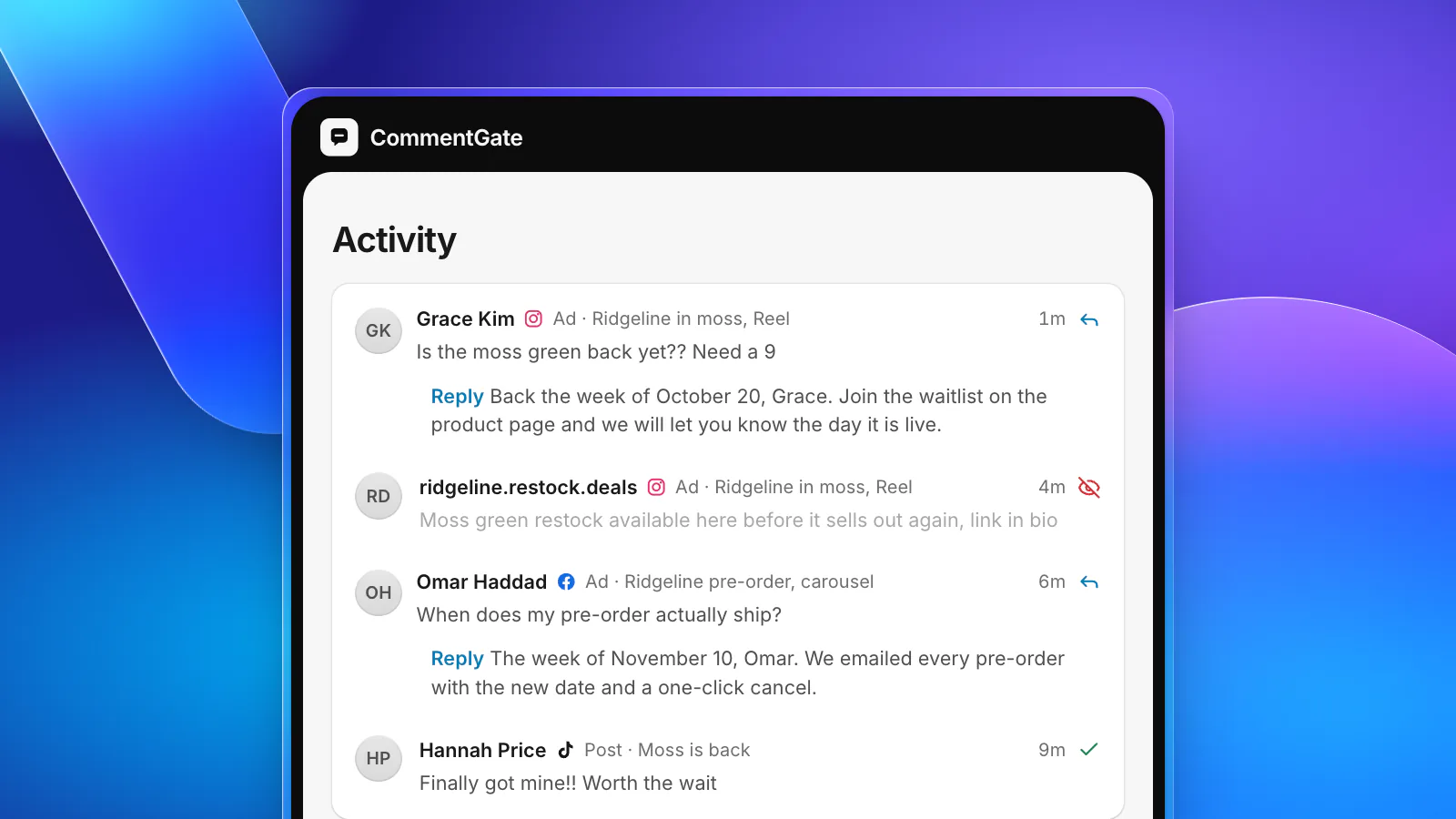
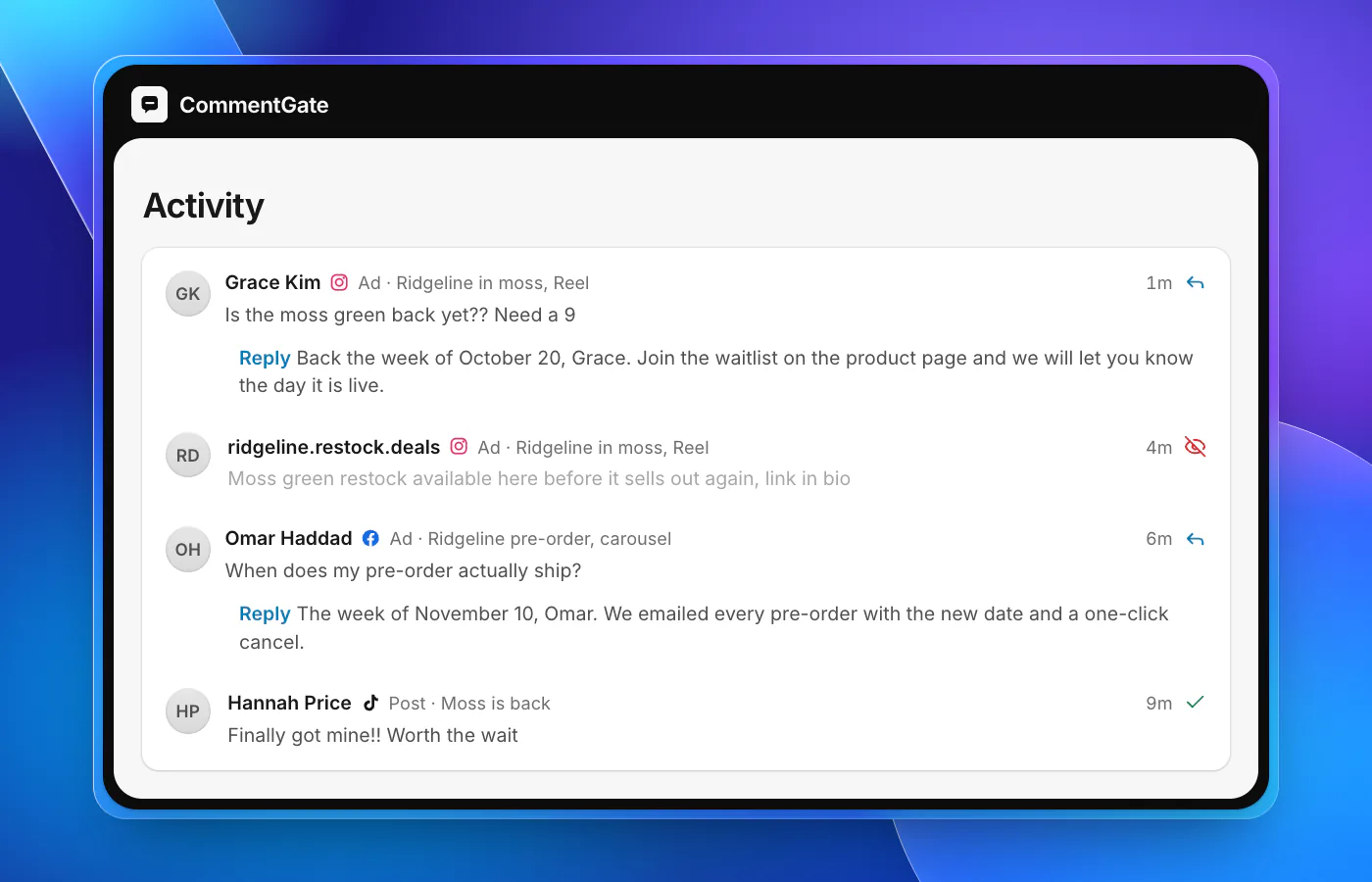
- "It is, Grace. The next batch lands the week of October 20. Join the waitlist on the product page and we will send you a note the day it is live."
- "We are not restocking the moss green, sorry. The slate is the same boot in a darker color, and it is in stock."
If you do not have a date, do not invent one. "We are waiting on a date from the factory, and we will post it here as soon as we have it" is honest, and it gives you a reason to come back to the thread.
For dropshipping stores
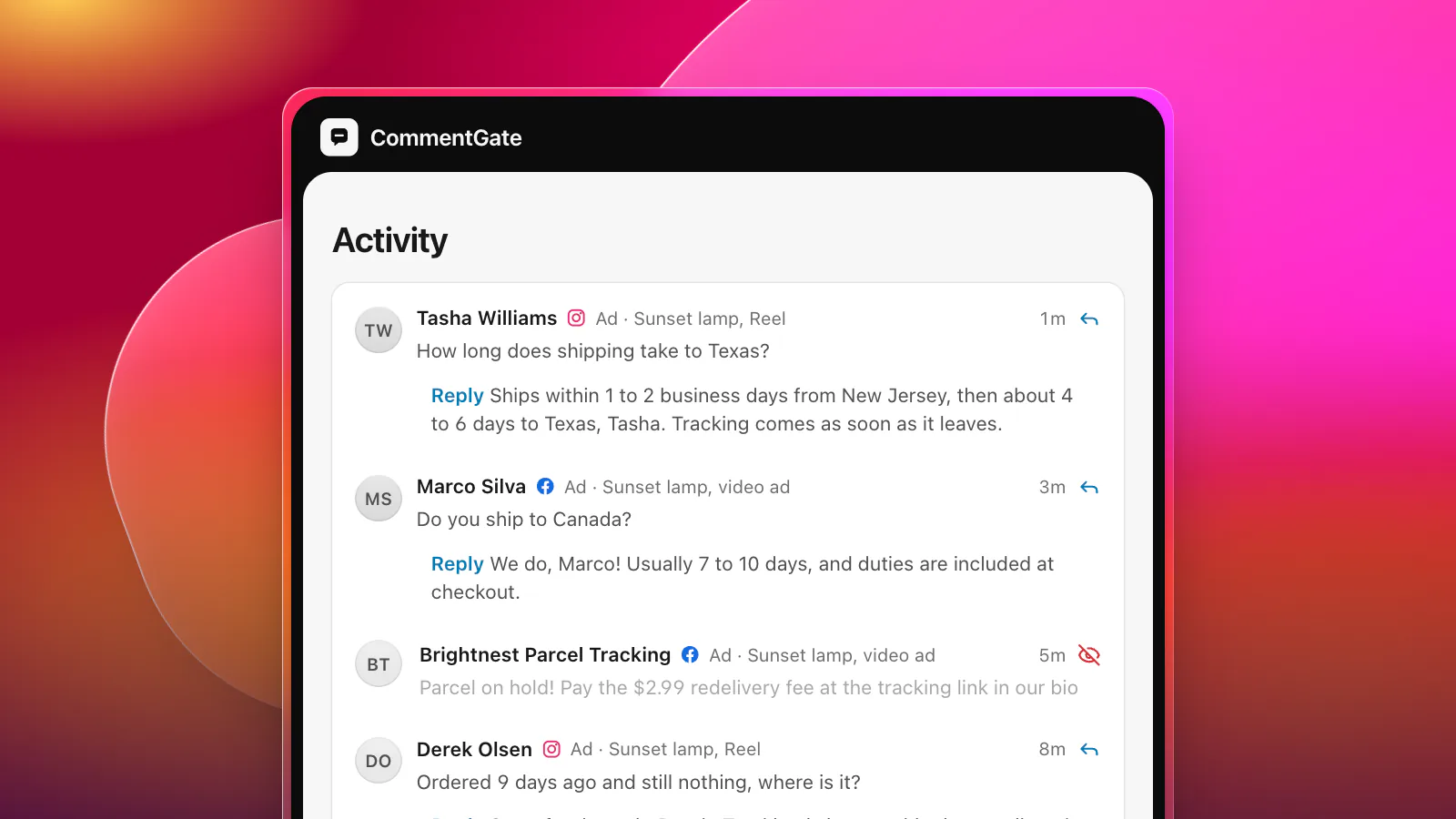
When a supplier runs out, the store often finds out after the customers do. Two habits help: check stock before scaling an ad, and keep one honest line ready for when it happens: "Our supplier sold through this batch faster than expected. New orders ship from the next one, around October 28, and you can cancel any time before it ships."
When you open pre-orders
A pre-order is a promise with a date on it. The comments will test that promise from the day you open it to the day the last parcel arrives.
Say three things clearly, in the product page and in every pre-order reply:
- When it ships. A week or a range, not "this fall".
- When they pay. Now or at shipping.
- What happens if the date moves. That you will tell them, and that they can cancel for a full refund.
That third point is not only good manners. In the US, the FTC's Mail, Internet, or Telephone Order Merchandise Rule requires a seller to have "a reasonable basis" for the shipping time it states, and if it cannot ship on time, to offer the buyer "an option either to consent to a delay in shipping or to cancel the buyer's order and receive a prompt refund" (FTC business guide to the rule). Pre-orders are where that rule gets tested most often, so read the guide before you open one.
When a pre-order slips
Delays happen. The comment threads under your pre-order ads are where people will find out, if you do not tell them first.
- Tell them before they ask. Email every pre-order customer with the new date and the option to cancel. Then post the same news where the comments are.
- Answer every "where is my pre-order?" in public, with the new date. "It moved to the week of November 10, Omar. We emailed everyone yesterday with the new date and a one-click cancel if that no longer works for you."
- Do not hide the frustration. A pre-order customer asking about a delay is a customer, and every future pre-order buyer is reading how you treat them. Our guide to negative comments goes deeper.
- Send the dispute threats to a person. "Cancel it or I'm filing a chargeback" is not a moderation decision. Someone who can issue the refund should answer it today.
When it is back in stock
Restock day brings three things at once: buyers, questions, and scammers who know the buyers are coming.
Go back to the old questions. Reply under the "is it coming back?" comments from last month: "It's back, Grace! Link is in our bio." The people who asked get a notification, and everyone who reads the thread sees the product is live.
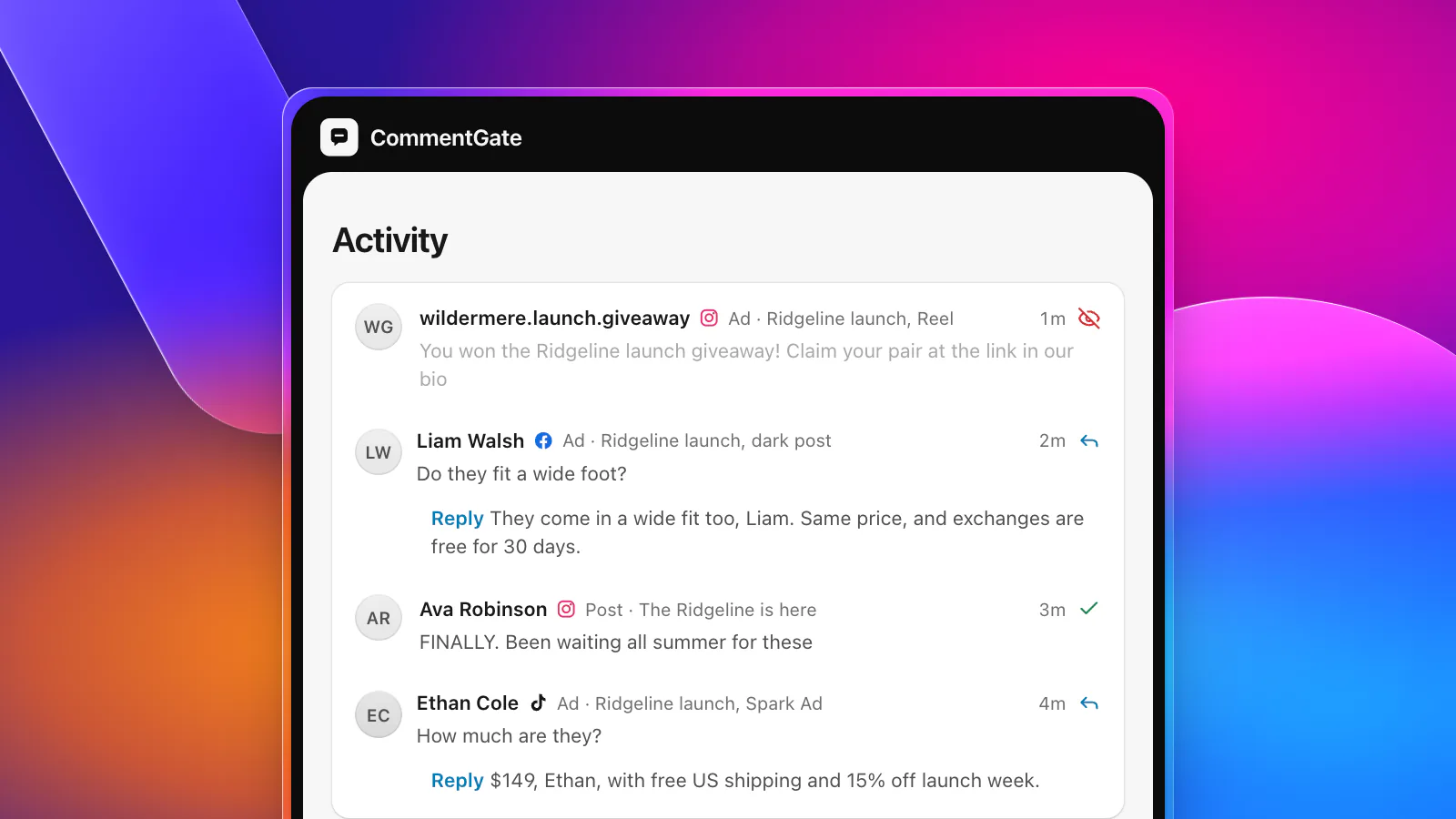
Expect fake restock links. Comments like "restock available here" with a link to a lookalike store, or an account with your logo saying "claim your restock spot, DM us", appear on popular drops. Hide them fast, and never reply to them. Turning on the switch that hides links to other sites during the restock window closes the most common trick; links to your own site stay up. On TikTok ads, the platform's own blocked-word list hides matching comments the instant they are posted, up to 500 words per ad account (TikTok, blocked words).
Answer the size and color questions fast. "Is the 11 back too?" is someone deciding right now. A reply an hour later is a reply to someone who already left.
Doing this with CommentGate
Stock status is exactly the kind of fact that changes weekly, which is why CommentGate keeps it in one place.
- Your notes carry the stock line. "Moss green sold out, restock week of Oct 20, waitlist on the product page." Every drafted reply uses it, and when you change it, the next draft follows.
- Your own topics. Add "questions about the restock" or "pre-order delay" as a topic, and every matching comment is easy to find, count and answer together.
- Needs you for the hard ones. Chargeback threats and defect reports wait for a person with a one-line reason. Simple "is it back?" questions do not.
- Scams handled on their own. Fake restock links and fake support accounts are hidden within seconds on Facebook and Instagram, and within minutes on TikTok.
- Waitlist links through comment-to-DM. A keyword campaign can send the waitlist link in one private message on Facebook and Instagram, and CommentGate never sends a second one for the same comment.
For wording to start from, see the stock and restock reply templates, and for the busiest weeks of the year, the holiday sale playbook.