Replies in your brand’s voice: how to write guidance an AI can follow
"Be friendly and on-brand" gives a writer nothing to work with, human or not. Here is how to write voice notes, reply rules and facts that produce replies you would have sent yourself, with a template and examples.
Guides 6 min read
On this page
Every tool that drafts replies asks for the same thing: describe your brand's voice. Most brands write something like "friendly, helpful and on-brand", get replies that are friendly, helpful and generic, and decide the tool does not get them.
The problem is rarely the writer. "Friendly" means something different to every person who reads it, and a writer, human or AI, can only follow what is actually on the page. Good guidance reads less like a mood board and more like the note you would leave a new hire on their first day answering comments.
The three things a writer needs
Reply guidance does three jobs, and they work better apart than mixed together.
- Voice: how replies sound. Length, warmth, formality, humor, punctuation, emoji.
- Instructions: what every reply should do and never do. Rules, not adjectives.
- Facts: what replies know. Shipping times, sizing, returns, where things are.
When they are mixed into one paragraph, a fact gets treated as a style, or a rule gets lost in a description. Keep them separate and each one can be checked on its own: does this reply sound right, does it follow the rules, is it correct?
Write voice as things you can hear
Adjectives are where guidance goes vague. Replace each one with what it looks like in a reply.
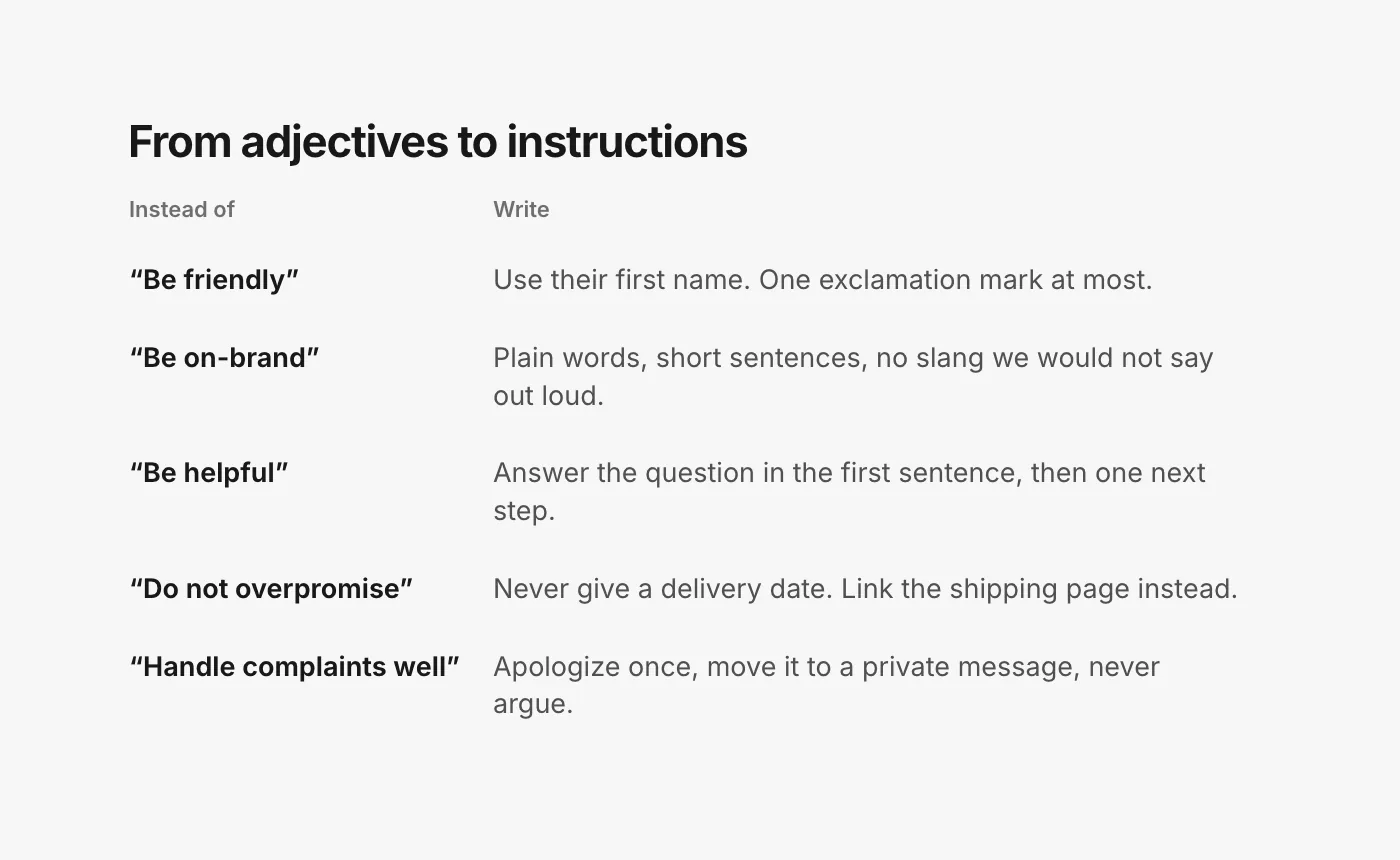
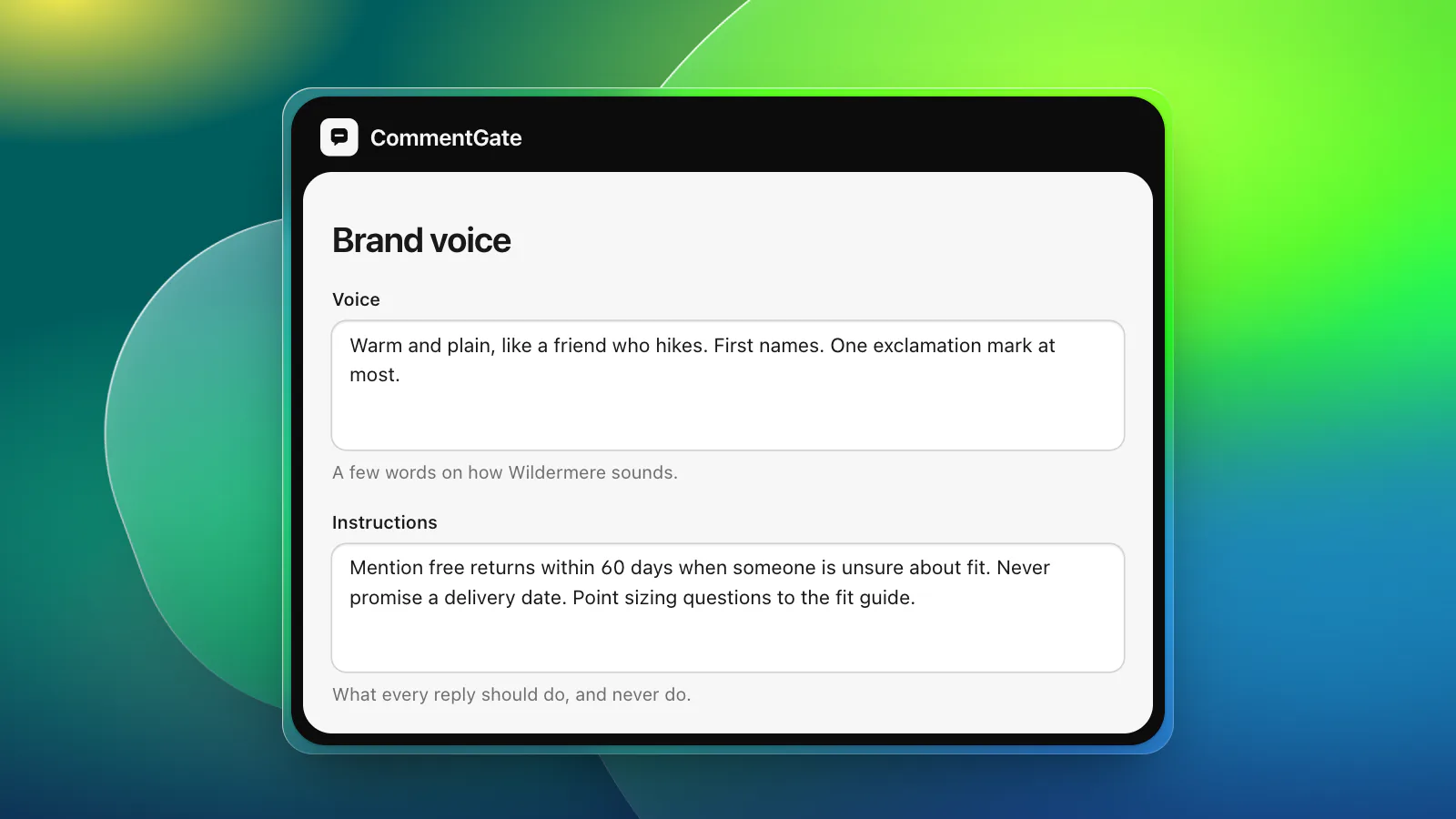
A useful test: could two people read your voice note and write replies that sound alike? "Friendly" fails that test. "Use their first name, one exclamation mark at most, no emoji" passes it.
Things worth deciding out loud:
- Length. One or two sentences is right for most comment replies. Threads caps a post at 500 characters (Threads API overview), and a reply under an ad is read by people scrolling past.
- Names. First name, handle, or neither.
- Punctuation and emoji. How many exclamation marks, which emoji if any.
- Words you use and words you never use. "Folks" or "everyone". "Sorry" or "apologies". Your product names written the way you write them.
- Humor. Whether you joke back, and where you never do (complaints, safety, money).
Write instructions as rules with a reason
Instructions are where replies go right or wrong. Write each as a sentence someone could check a reply against, and add the reason when it is not obvious. A writer that knows why a rule exists applies it better to the case you did not think of.
- Answer first. "Answer the question in the first sentence, then give one next step." A reply that opens with "Great question!" and gets to the answer in sentence three is a reply people skip.
- Never promise what you cannot control. "Never give a delivery date; link the shipping page, because carriers slip." "Never promise a restock date."
- Say how complaints go. "Apologize once, ask them to message us with their order number, never argue in public." Our templates have wording to start from.
- Name what not to claim. If you sell anything near health, say so plainly: "Never say a product treats, cures or prevents anything." The FTC expects health claims about products to be backed by competent and reliable scientific evidence (FTC, Health Products Compliance Guidance), and a casual reply is still your claim.
- Say what goes to a person. "Do not reply to refund demands, chargeback threats, injury or defect reports, press or partnership offers. Leave them for the team." These are not tone problems. They are decisions.
- Vary the wording. Replies that repeat the same text word for word look automated, and YouTube's help center lists repeatedly posting the same comment among the things its spam systems can remove (YouTube Help).
Give it the facts, one question at a time
Most bad replies are not off-voice. They are wrong: last season's return window, a shipping estimate from before you added Canada. Facts belong in a list of questions and answers, each short and current:
- "Do you ship to Canada?" Yes, to Canada, the UK and Australia, and duties are included at checkout.
- "Do these run true to size?" True to size; between sizes, go half a size up.
- "How do returns work?" Free returns for 60 days, from the link in your order email.
Write them the way customers ask, not the way your policy page is titled. Update them the day something changes, and delete the ones that are no longer true. Our guide to answering "is this legit?" and sizing questions covers the two questions that come up most under ads.
A template to copy
Then test it the honest way: take twenty real comments from last month, including three hard ones, and see whether the replies are ones you would have posted. Every reply you would change tells you which line of guidance is missing. Our free reply tone checker is a quick way to check a draft against the voice you wrote.
Where this goes in CommentGate
CommentGate keeps the three parts in the places they are used.
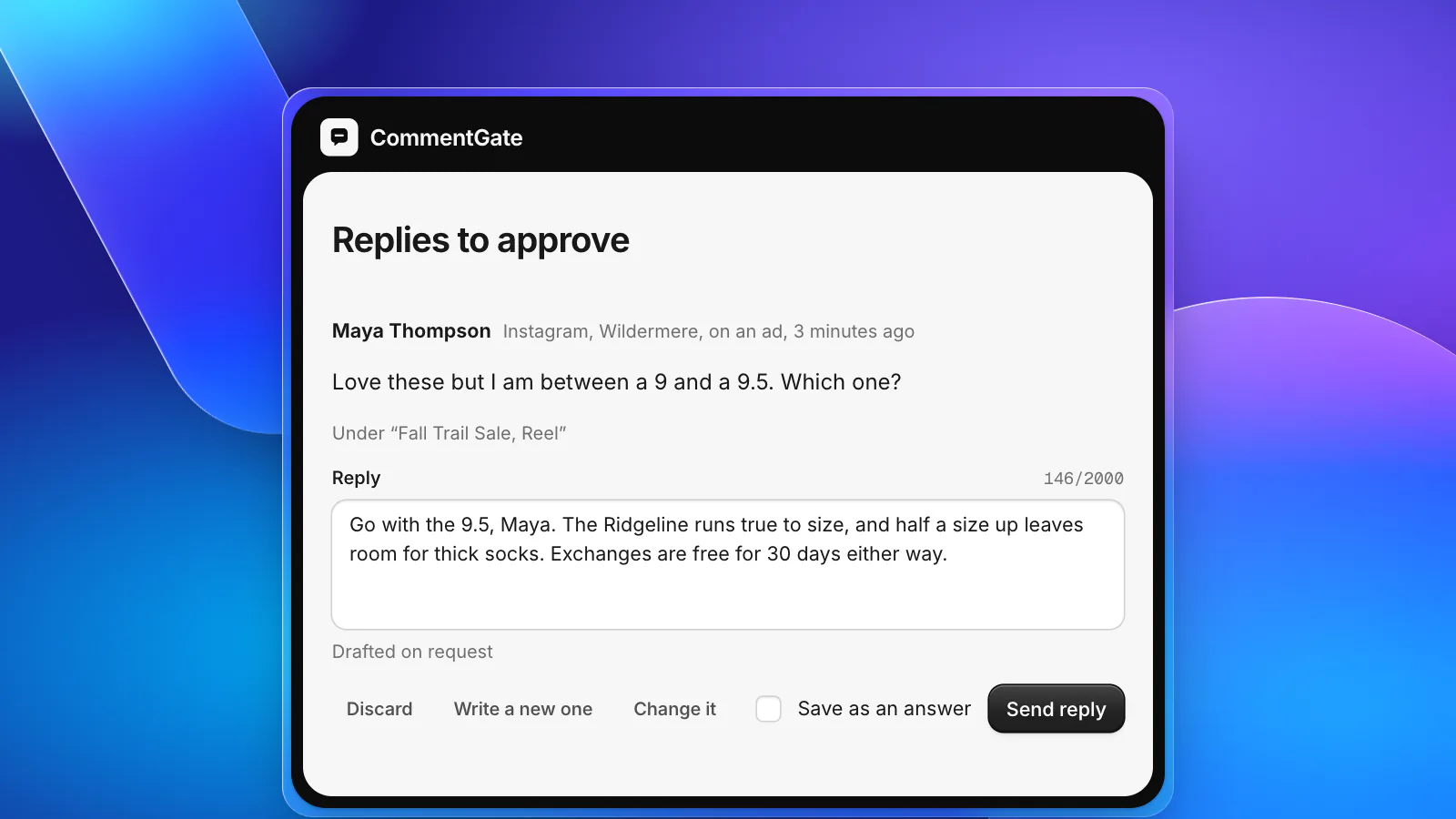
- Voice and instructions. Under Replies, the Brand voice section has a Voice field ("a few words on how your brand sounds") and an Instructions field ("what every reply should do, and never do"). They apply to every reply CommentGate drafts. On Setup, Tone of replies sets the overall style: friendly, professional or short.
- Facts. Under Replies, Knowledge, each answer is a question and an answer. CommentGate picks the ones that fit each comment, and it does not add any on its own: you decide what goes in.
- What goes to a person. In a reply agent, Skip comments that mention any of these words keeps touchy subjects like refunds away from automatic replies. The judgement calls (a chargeback threat, a defect report, a partnership offer) wait for you in Needs you rather than getting a cheerful answer.
- Setup guidance is about hiding. The line on Setup ("Anything we should know about your brand?") tells the autopilot what to hide and keep, such as "never hide complaints about delivery". Keep reply style out of it.
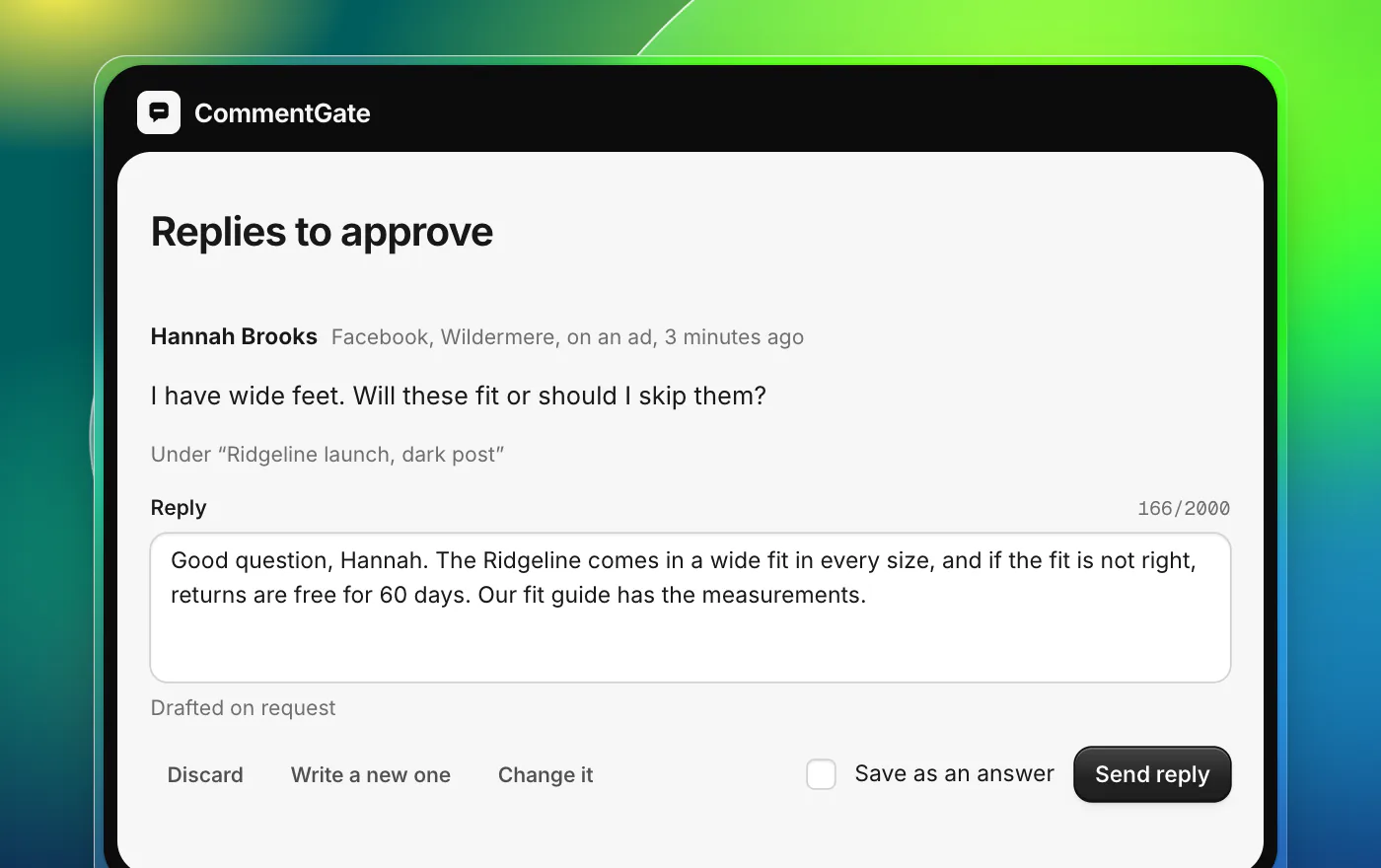
Start with drafts (Answer questions set to Draft for me on Setup, or Wait for my approval in a reply agent), so every reply waits under Waiting for approval until someone sends it. When a draft is close but not right, type what to change ("shorter", "mention free returns") and it is rewritten. When a draft is exactly right, Save as an answer adds it to Knowledge, so the next reply starts from it. Replies are drafted in the commenter's language, which the many languages guide covers in more depth.
Once you rarely change a draft, switch that agent to Send on its own. Replies then go out after a short random wait, and you can switch back at any time. See AI replies for everything the drafts can do, and the glossary entry on brand voice for a one-line definition to share with your team.