When to automate comment moderation, and when a person should decide
Automating everything hides real customers. Automating nothing means scams sit under your ads all night. Four questions sort every kind of comment into the right place, and here is how to let automation earn more over time.
Guides 5 min read
On this page
The argument about automating comment moderation usually happens at the wrong level. One side says machines cannot understand context, so a person should read everything. The other says nobody has time for that, so a tool should decide everything. Both are right about some comments and badly wrong about others.
The useful question is not "automate or not", but "which comments". A fake giveaway under your ad and a customer threatening a chargeback are both comments. They have almost nothing else in common.
Four questions that sort any comment
For each kind of comment you see, ask four things.
1. How bad is a wrong call?
Some mistakes are cheap. If a spam comment stays up for an hour, a few people scroll past it. Some are expensive. If a real customer's complaint disappears, they notice, screenshot it, and post again somewhere louder. Hiding a real customer is usually a worse mistake than missing a piece of spam, and your rules should reflect that: when unsure, keep it up and ask.
2. Can it be undone?
Hiding can be undone on every platform. Deleting cannot. On YouTube, a comment set to "rejected" cannot be brought back (YouTube Data API, comments.setModerationStatus), and on TikTok, other people's comments can only be hidden, never deleted (TikTok API for Business, delete a comment). Anything automated should use the reversible action. Irreversible actions (deleting, blocking someone) belong to a person.
Order matters too. On Instagram, you cannot reply to a comment once it is hidden (IG Comment replies), so if a comment needs both an answer and hiding, the answer goes first.
3. How clear is the pattern?
"Congrats, you won! Claim your prize at the link in our bio" from an account wearing your logo is clear. "Is this the same sole as the old model? Mine wore out in a year" could be a question, a complaint or both. Clear patterns automate well. Ambiguous ones are where a person earns their keep.
4. How fast does it matter?
A scam under an ad does its damage in minutes, while people are reading. A partnership offer can wait until tomorrow morning without losing anything. Where speed matters and the pattern is clear, automation wins outright, because nobody watches a comment section at 3 a.m.
Where each kind of comment lands
Run the common kinds of comment through those questions and three columns appear.
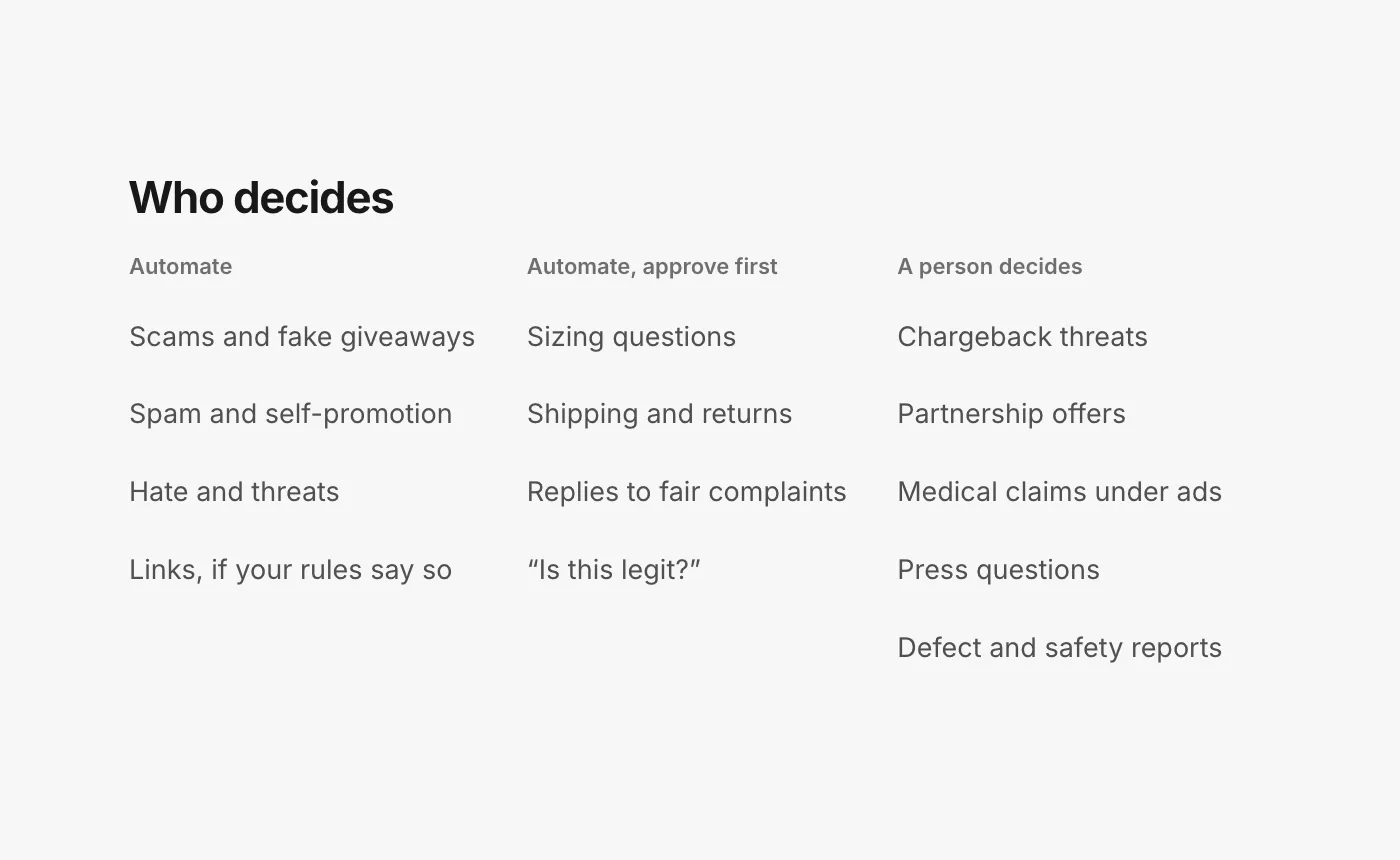
- Automate: scams and fake giveaways, fake support accounts, spam and self-promotion, hate and threats, and, if your guidelines say so, links and phone numbers. Clear patterns, cheap to undo, and they need to be gone fast.
- Automate with approval first: answers to questions about sizing, shipping and returns, and the first reply to a fair complaint. The facts are known, but wording is visible to everyone, so a person approves drafts until they are consistently right.
- A person decides: chargeback and dispute threats, partnership and influencer offers, medical or health claims under an ad, press questions, and defect or safety reports. Each is a business decision, not a moderation one. A chargeback threat may need a refund. A health claim under a paid ad is a compliance question: the FTC expects health claims about products to be backed by competent and reliable scientific evidence (FTC, Health Products Compliance Guidance), and glowing praise does not change that.
One more group deserves a line of its own: criticism. "Too expensive for what it is" is not harmful, not a scam, and not something to hide. Most brands leave negative comments up and answer the fair ones, which our guide to negative comments on ads covers in detail.
Signs you have the line in the wrong place
Automating too much:
- Customers post "why did you delete my comment?" (they usually mean hide).
- Hidden comments include questions, or complaints with an order number in them.
- Replies go out that you would not have written, or that answer the wrong question.
Automating too little:
- Scams or spam sit under ads overnight or through the weekend.
- Your team spends its time hiding obvious spam and never gets to the questions.
- Questions wait hours for an answer that was already written down somewhere.
Whichever side you are on, the fix is usually the same: write the line down. Our comment guidelines template turns the three columns above into one page your team, agency and tools can all follow.
Let automation earn trust, one area at a time
The line is not fixed. A new tool should start careful and take on more as it proves itself, the way you would with a new hire: small decisions first, bigger ones once you have seen them get it right.
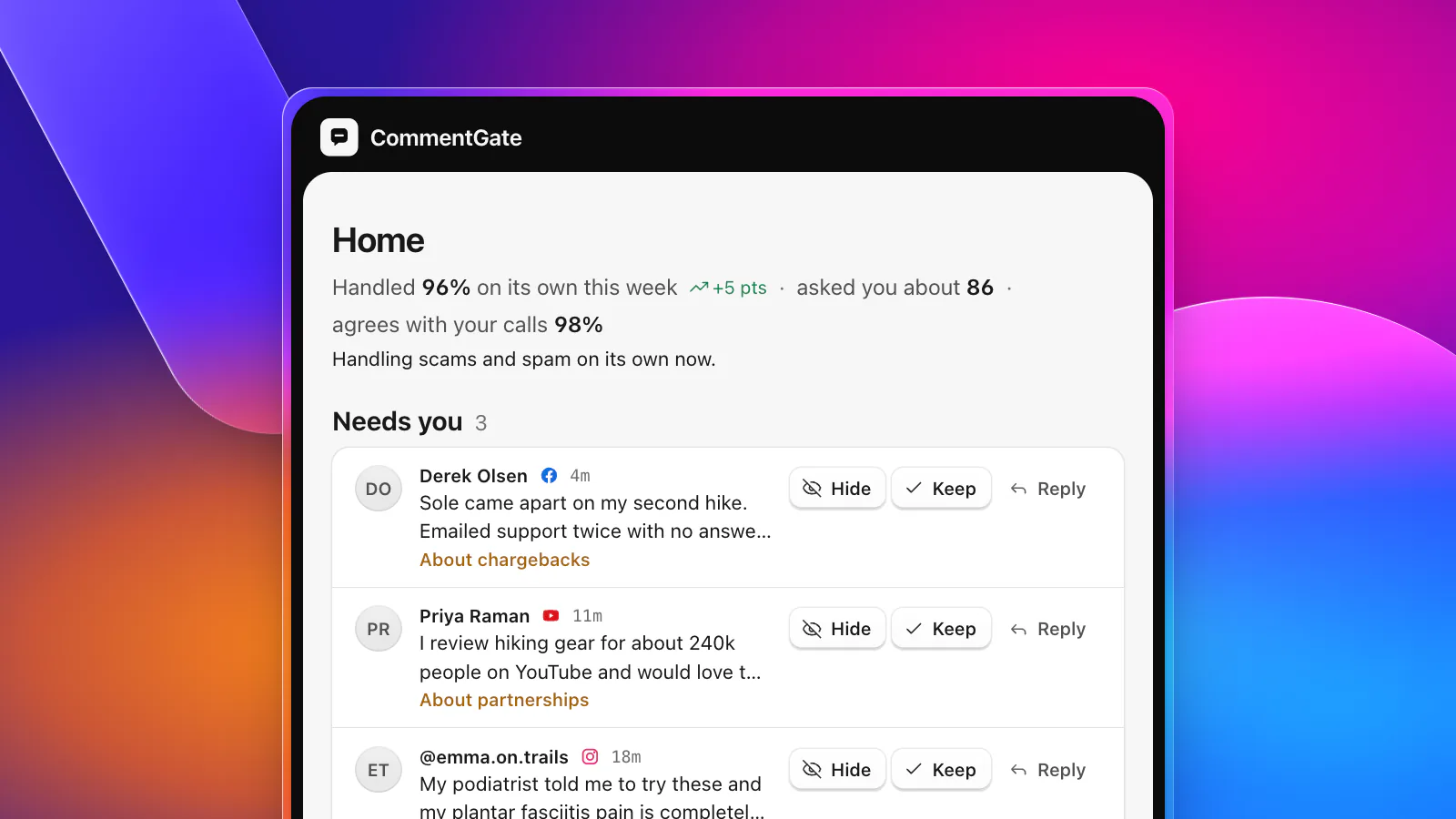
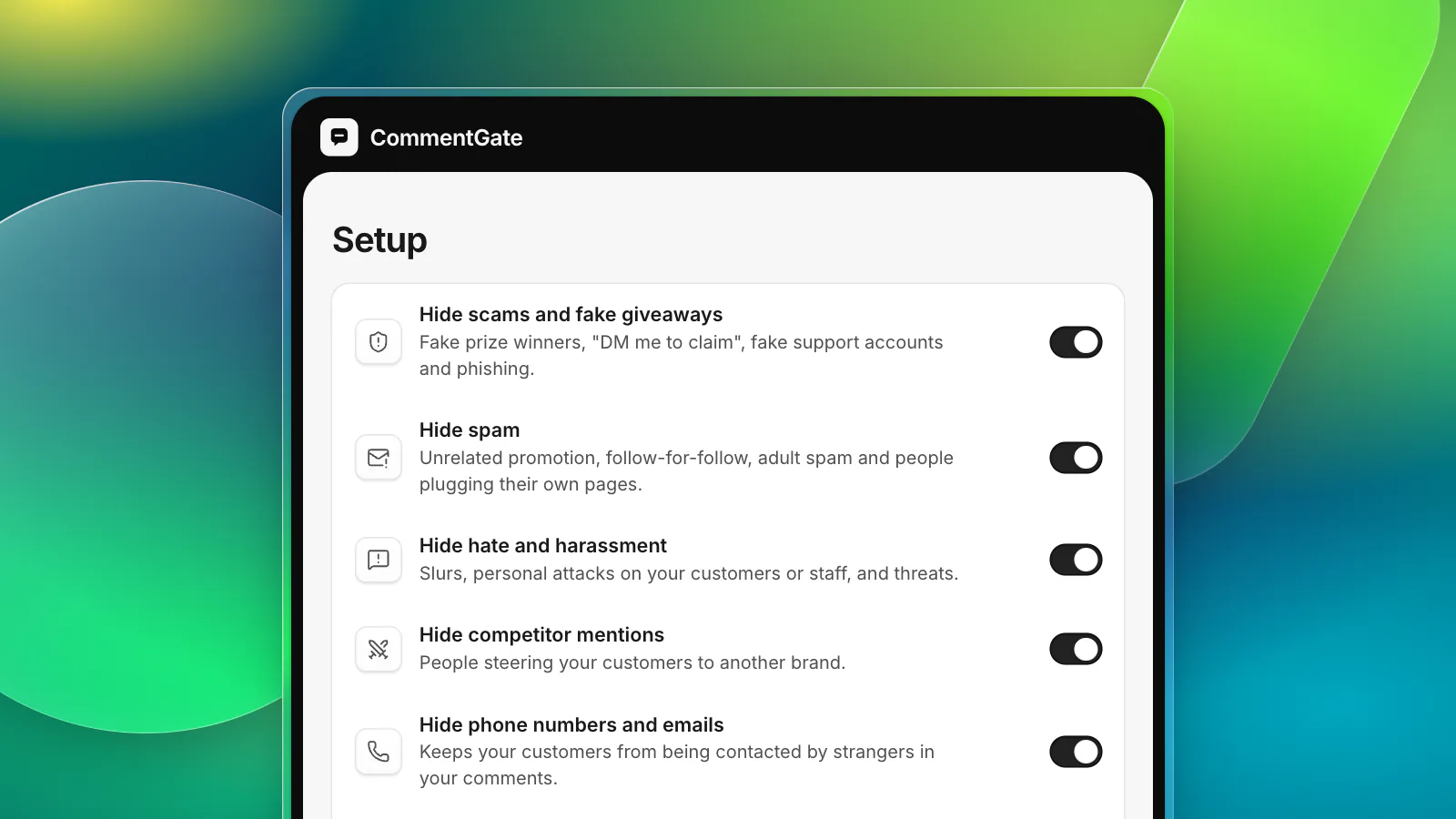
That is how the CommentGate autopilot works. Scams, spam, hate and competitor mentions are switched on from the start; profanity, links, phone numbers and emails, images and negative comments are switches you add if your guidelines say so. What it is sure about, it handles. What it is not sure about waits for you in Needs you, with why it is asking and which way it leans.
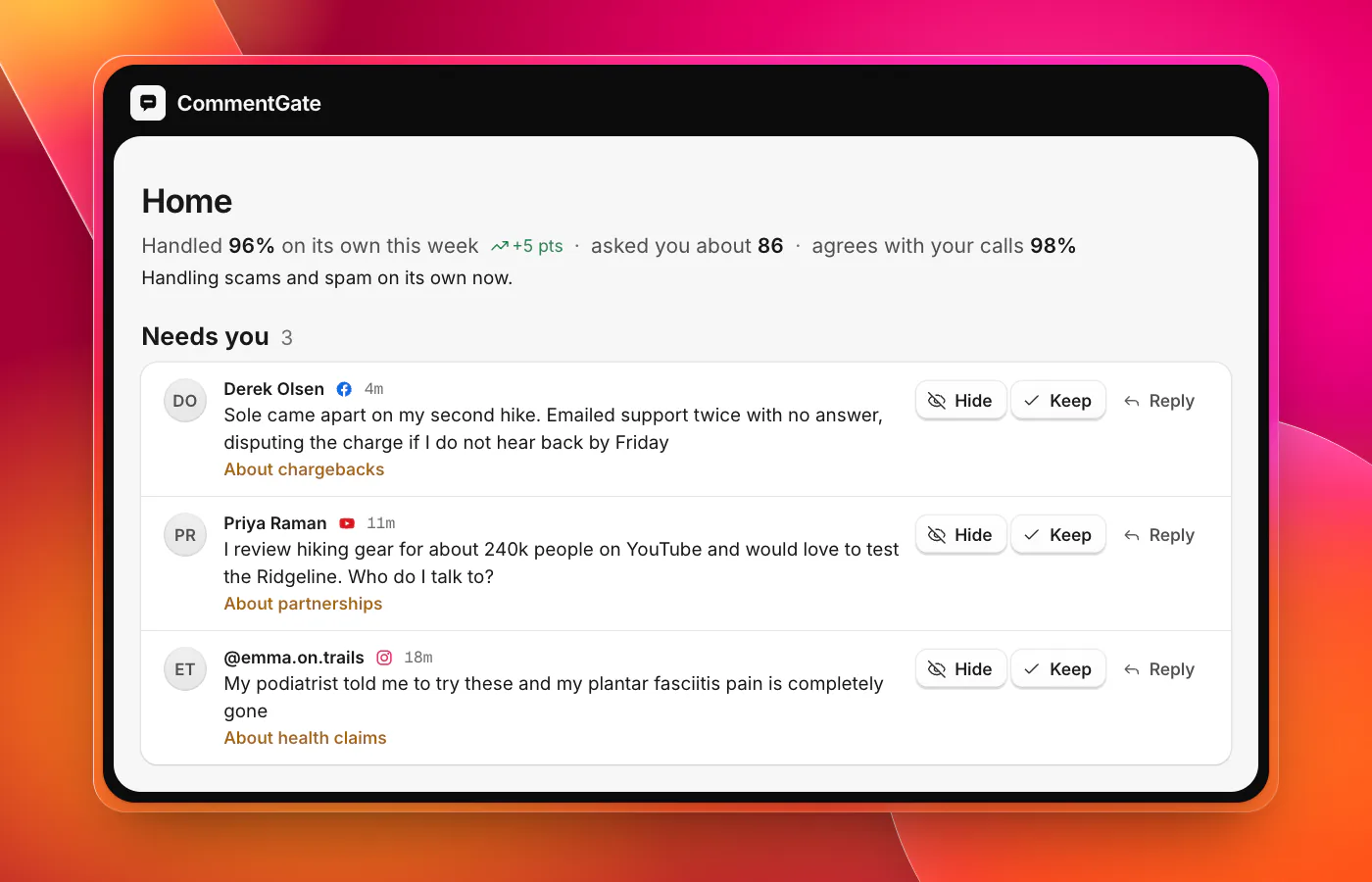
Every answer you give there, and every comment you unhide or hide in Activity, is a correction it learns from. It tracks agreement per area:
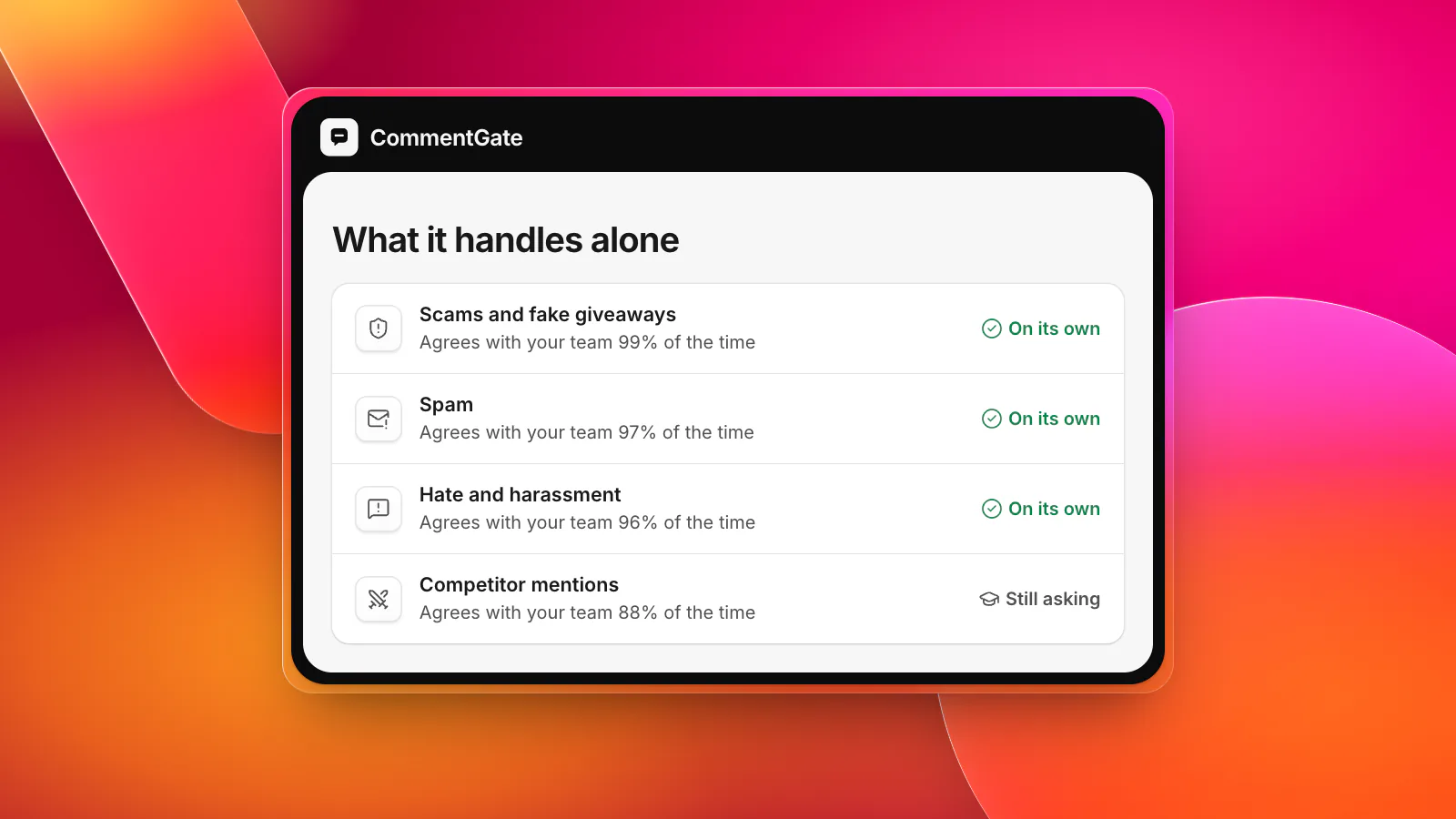
- Once it agrees with at least 95% of your last 100 answers in an area (with at least 50 answers), it handles that area on its own and asks you less. Home says so plainly, for example that it now handles scams on its own.
- If agreement in an area drops under 85%, it becomes more careful at once and sends more of those comments back to you.
- Rules you set with an explicit action, and your own lists, always win over what it has learned.
Questions follow the same path. Answer questions starts at Draft for me, where every reply waits for approval. When you find you are approving drafts without changing them, switch it to Send on its own.
The judgement calls never graduate out of your hands by design. A chargeback threat is always worth a person's minute, and so is a partnership offer that could be worth more than the ad it sits under.
A starting point
If you are setting this up this week:
- Turn on automatic hiding for scams, spam and hate. Nearly every brand agrees on these.
- Keep questions on drafts and approve them for the first couple of weeks.
- Write down your "a person decides" list and who owns each item.
- Look at what was hidden once a day for the first week, and unhide anything you disagree with.
- After two weeks, read the weekly agreement numbers and decide what to hand over next.
Step 4 is the one people skip, and it is the one that makes the rest work. For a step-by-step setup, see set up your comment autopilot, and for sharing the "person decides" work across a team, see a comment moderation rota for a small team.