Influencer and UGC campaign comments: what brands should watch for, and what to leave alone
Creator posts, Spark Ads and partnership ads put your product in someone else’s comment section. What to watch for there, what to leave alone, and who is allowed to do what.
Guides 5 min read
On this page
Creator campaigns move your product into comment sections you do not own. The creator's post, a Spark Ad running on it, a Meta partnership ad with their name next to yours, or UGC clips cut into your own ads: each one draws a different crowd, and each one gives you different powers over what gets said there.
That makes two mistakes easy. Some brands ignore these comments because the post is not theirs, and scams and false claims sit under their product for weeks. Others treat the creator's audience like their own and start hiding banter, which the creator and their fans notice immediately. This guide covers where the comments live, what is worth acting on, and what to leave alone.
First: whose comment section is it?
What you can do depends on the format, so settle it before the campaign starts.
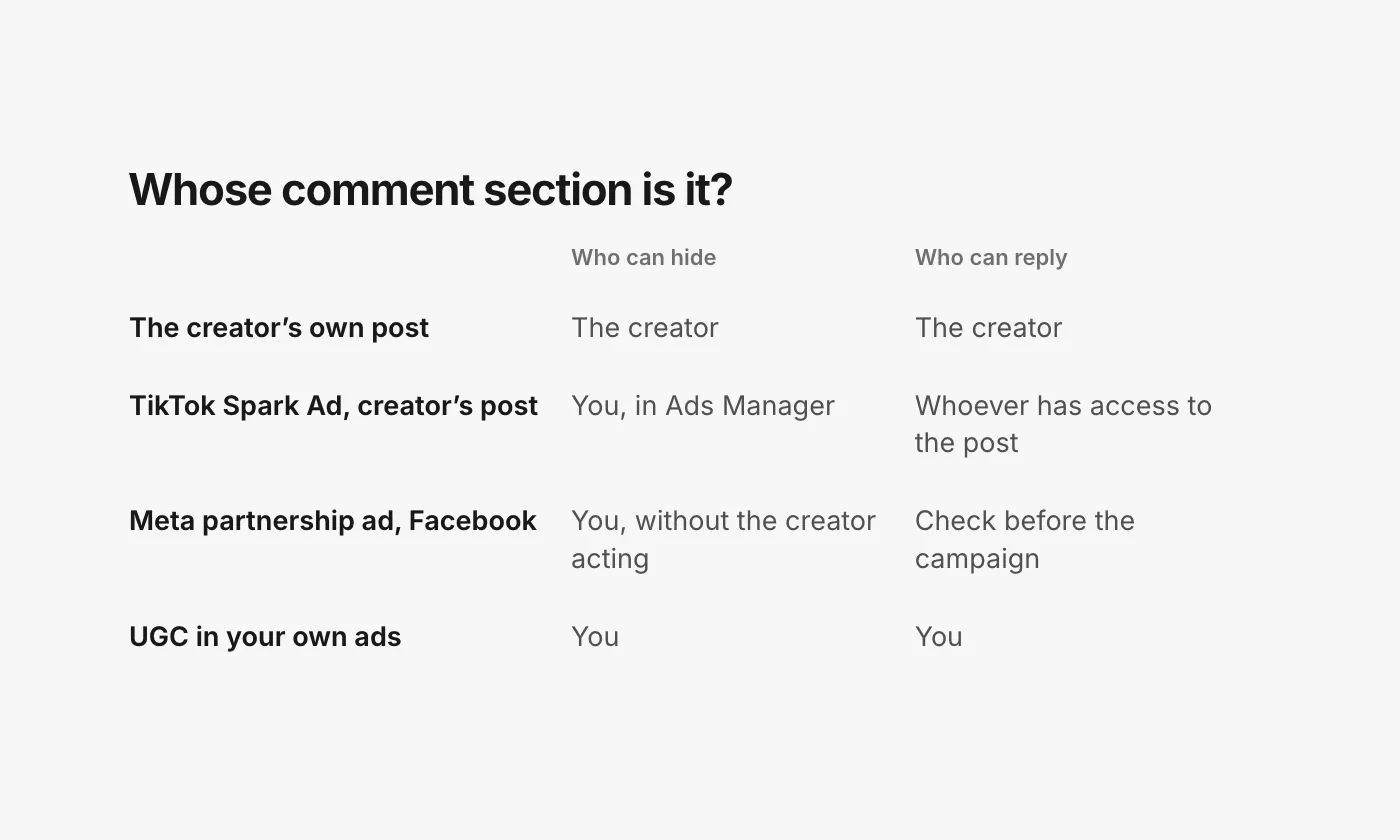
- The creator's own post. It is their post and their community. They moderate it with their own tools and filters. You can ask, not act.
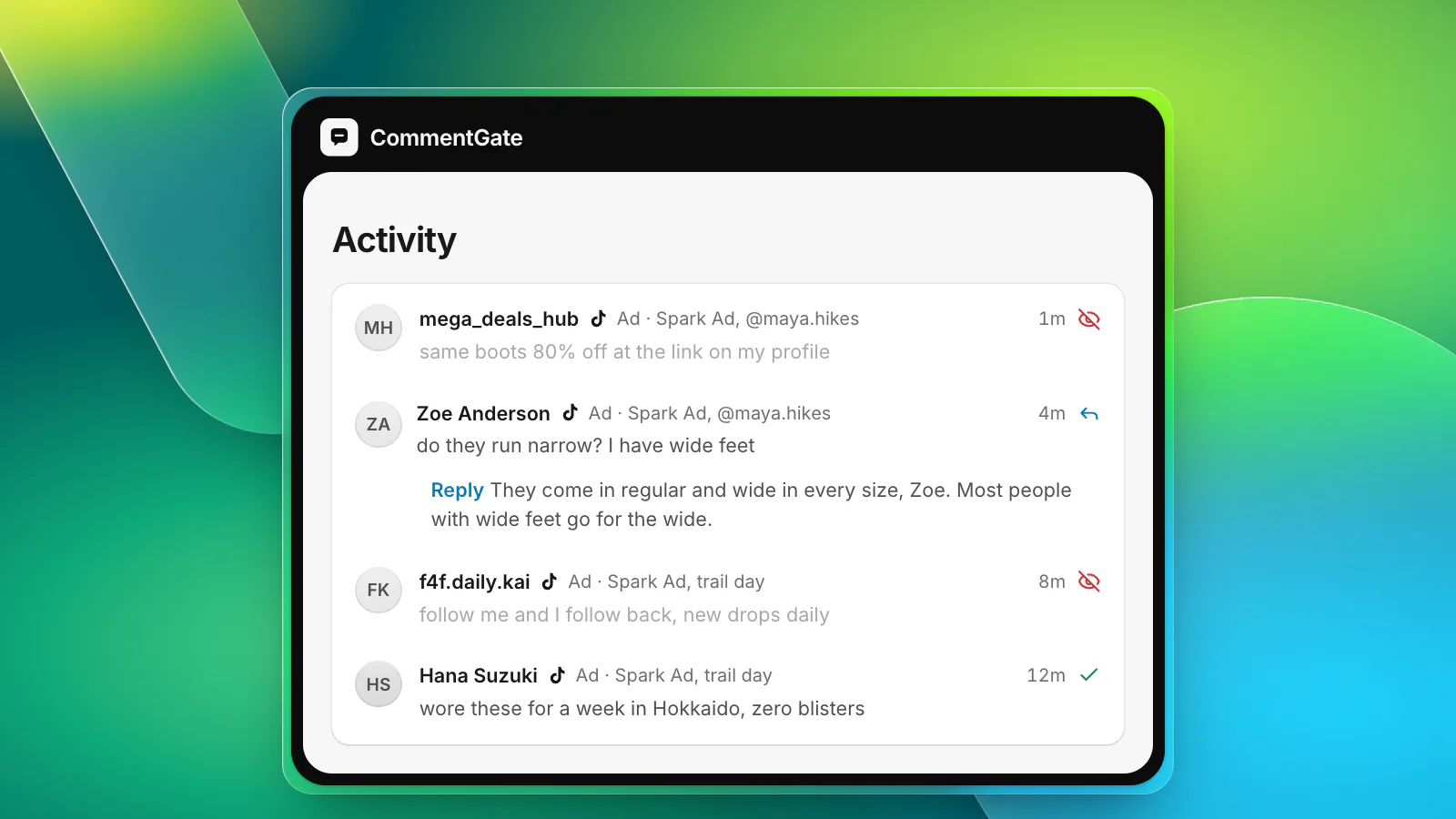
- A TikTok Spark Ad on a creator's post. The ad runs on the creator's organic post, so the comments live there. TikTok Ads Manager lets you hide comments on it, but "for Spark Ads created with authorized account or post, only the user who has access to the authorized account or post can reply to comments" (TikTok Ads Help: view and manage comments). In practice, the creator answers, or nobody does. Our Spark Ads guide goes further.
- A Meta partnership ad on Facebook. Meta lets the advertiser moderate comments on a partnership ad "even when another Page created the post, without needing the creator to take action", for comments on Page posts (Meta for Developers: partnership ads, boost an existing Facebook post). You can hide there, and the brief should say you will. Replying is a separate question: settle with the creator before launch who answers under the ad.
- UGC in your own ads. A creator's clip in an ad from your own account is your ad, and its comments are yours to moderate like any other.
What to watch for
Creator audiences are warmer than cold ad traffic, but they attract their own problems.
Fake creator accounts
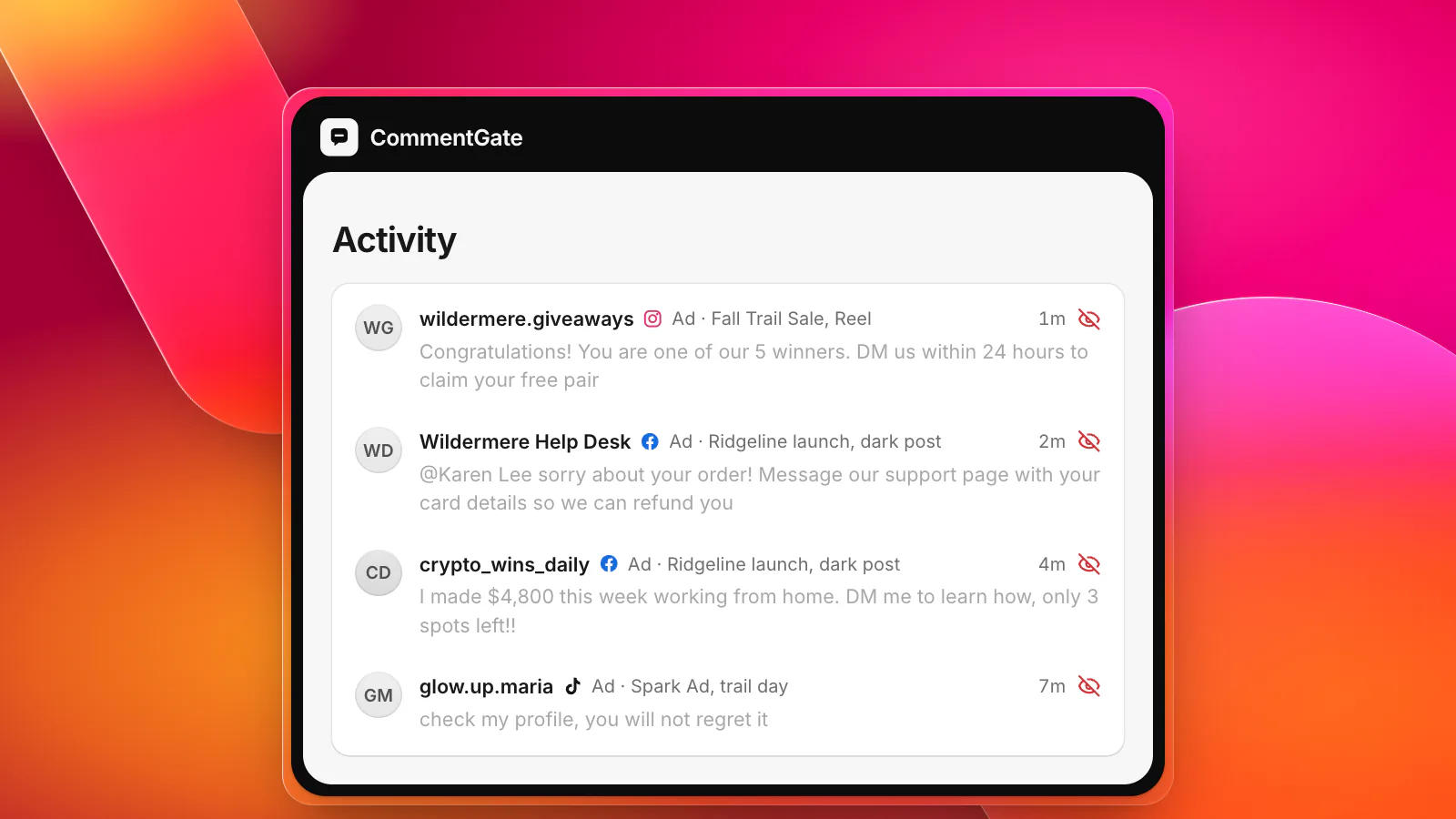
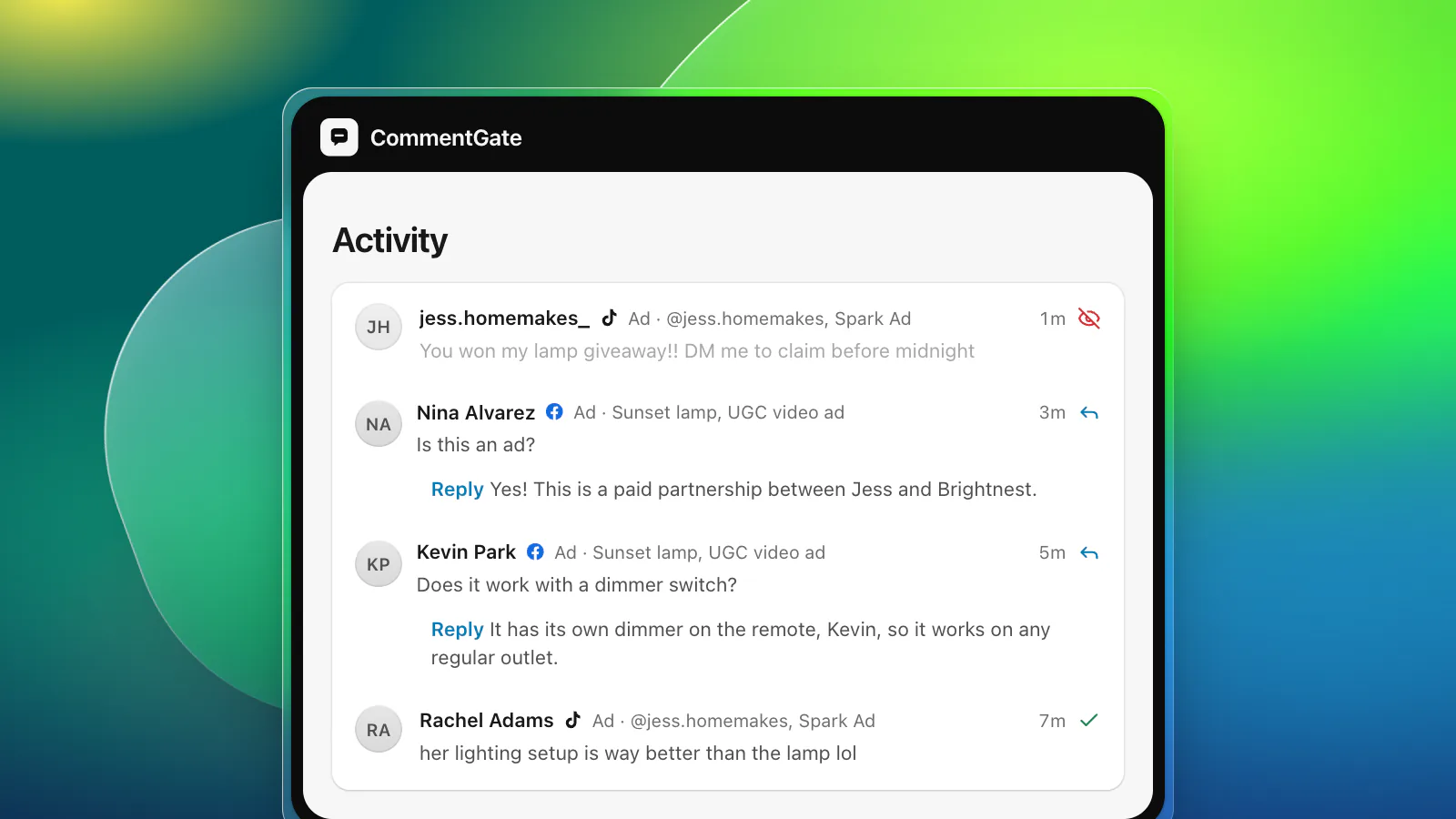
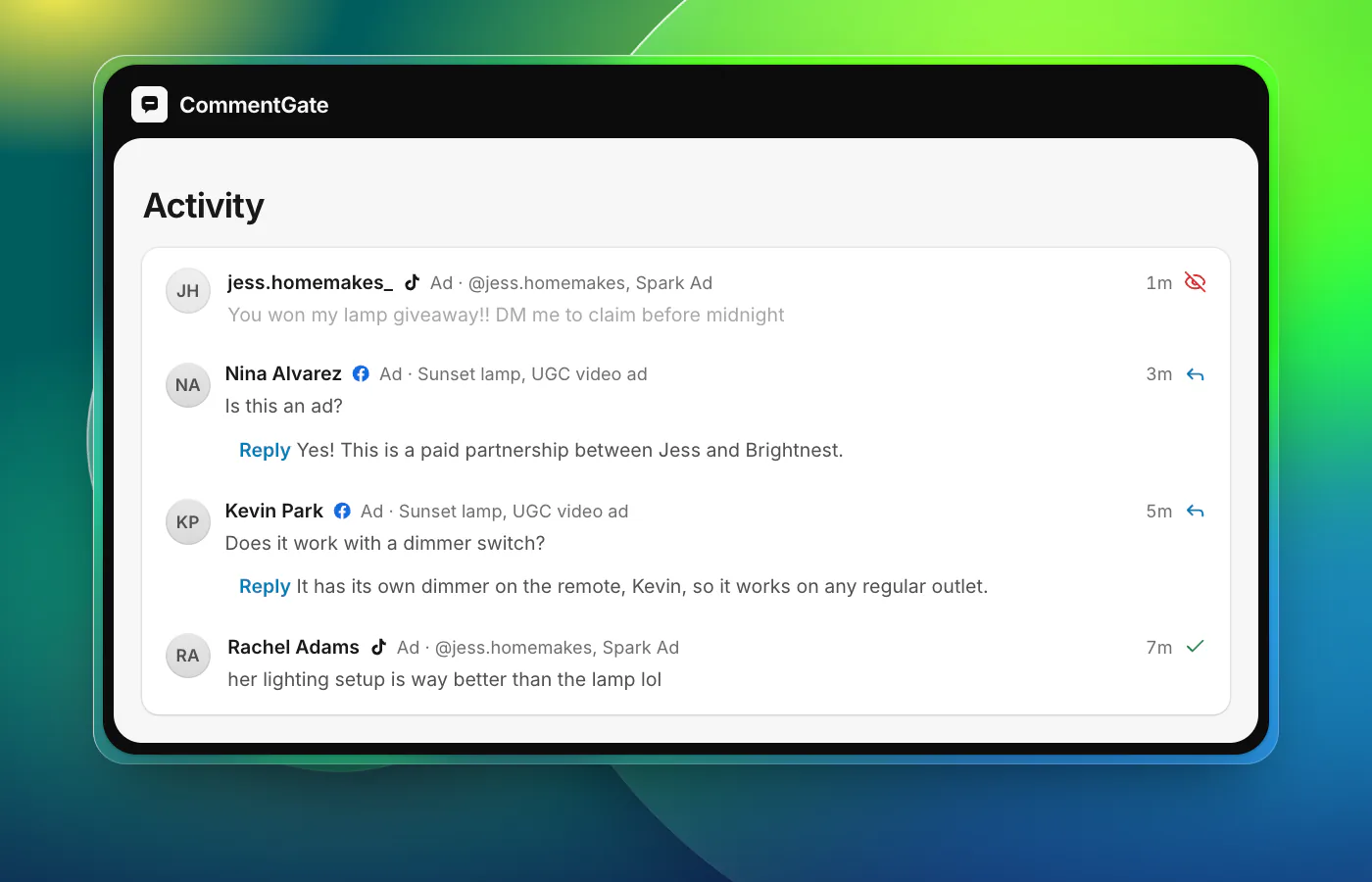
A common scam on creator campaigns is an account made to look like the creator: same photo, one letter off in the handle, replying to fans with "you won my giveaway, claim at the link in my bio" or "DM me for the discount code". It uses the creator's trust and your product. Hide it everywhere you can, tell the creator so they can report it, and have the creator pin a line about how real winners are contacted. Our guide to scam and fake giveaway comments covers the patterns.
"Is this an ad?"
Answer it, honestly, every time: "Yes! This is a paid partnership with Brightnest." A dodged disclosure question looks worse than the ad itself, and the disclosure is not optional. The FTC tells influencers to disclose "any financial, employment, personal, or family relationship with a brand", including free products, and to place the disclosure "with the endorsement message itself", not only on a profile page or mixed "into a group of hashtags or links" (FTC: Disclosures 101 for Social Media Influencers). If the comments keep asking, the disclosure in the post is probably too easy to miss. Fix the post, not just the replies.
Claims the product cannot back up
Creators and their fans get enthusiastic. "This cured my insomnia." "My anxiety is gone since I started using it." Under a product you pay to promote, those claims become part of the ad. The FTC is plain about who carries that: "Your company is ultimately responsible for what others do on your behalf", and advertisers "need to have reasonable programs in place to train and monitor members of their network" (FTC: Endorsement Guides, what people are asking).
Medical and health claims are judgement calls, not automatic hides. A customer sharing their experience is not the same as the creator making a claim in a pinned reply. Send them to a person who knows what the product can and cannot claim, and ask the creator to correct anything they said themselves.
Competitor plugs and lookalike stores
"Same lamp for $9 on another site, link in my bio" works even better under a creator's post, because the audience trusts the space. Hide it where you can, and ask the creator to hide it where you cannot.
Pile-ons against the creator
Sometimes the comments turn on the creator: their looks, their past, their politics. Hate and harassment get hidden, on your ads and on anything you control. On the creator's own post, offer help and follow their lead.
What to leave alone
This is the part brands get wrong most often.
- Fans talking to the creator. "Love your kitchen!", "where's that sweater from?" and inside jokes are not about you. Do not reply as the brand and do not hide them.
- Mild skepticism. "Every creator is selling this lamp now lol" is fair. A light, honest reply or no reply beats a hidden comment.
- Honest criticism of the product. Answer it the way you would on your own ad. See negative comments on ads.
- Questions for the creator. "Do you actually use it?" is theirs to answer.
Put it in the brief
Most comment problems on creator campaigns are avoided by one paragraph in the brief:
- Who answers what. The creator answers personal questions; the brand answers product, shipping and returns, where it can.
- What the brand will hide, where it has the power to: scams, fake creator accounts, hate, competitor plugs, personal details.
- What the brand will never hide: criticism, fans' chatter, and anything addressed to the creator.
- How claims are handled. No health or results claims the product cannot support, in the post or in the creator's replies.
- Disclosure. Where it goes and how it is worded, and that "is this an ad?" always gets a yes.
- Incentives. If you offer the creator's followers a discount for posting their own content, remember the FTC: "You can't condition an incentive... on a review being positive" (FTC: Endorsement Guides, what people are asking).
Doing this with CommentGate
CommentGate reads the comments on your own posts and on the ads in the ad accounts you connect, Spark Ads included, and does what each platform lets the advertiser do there:
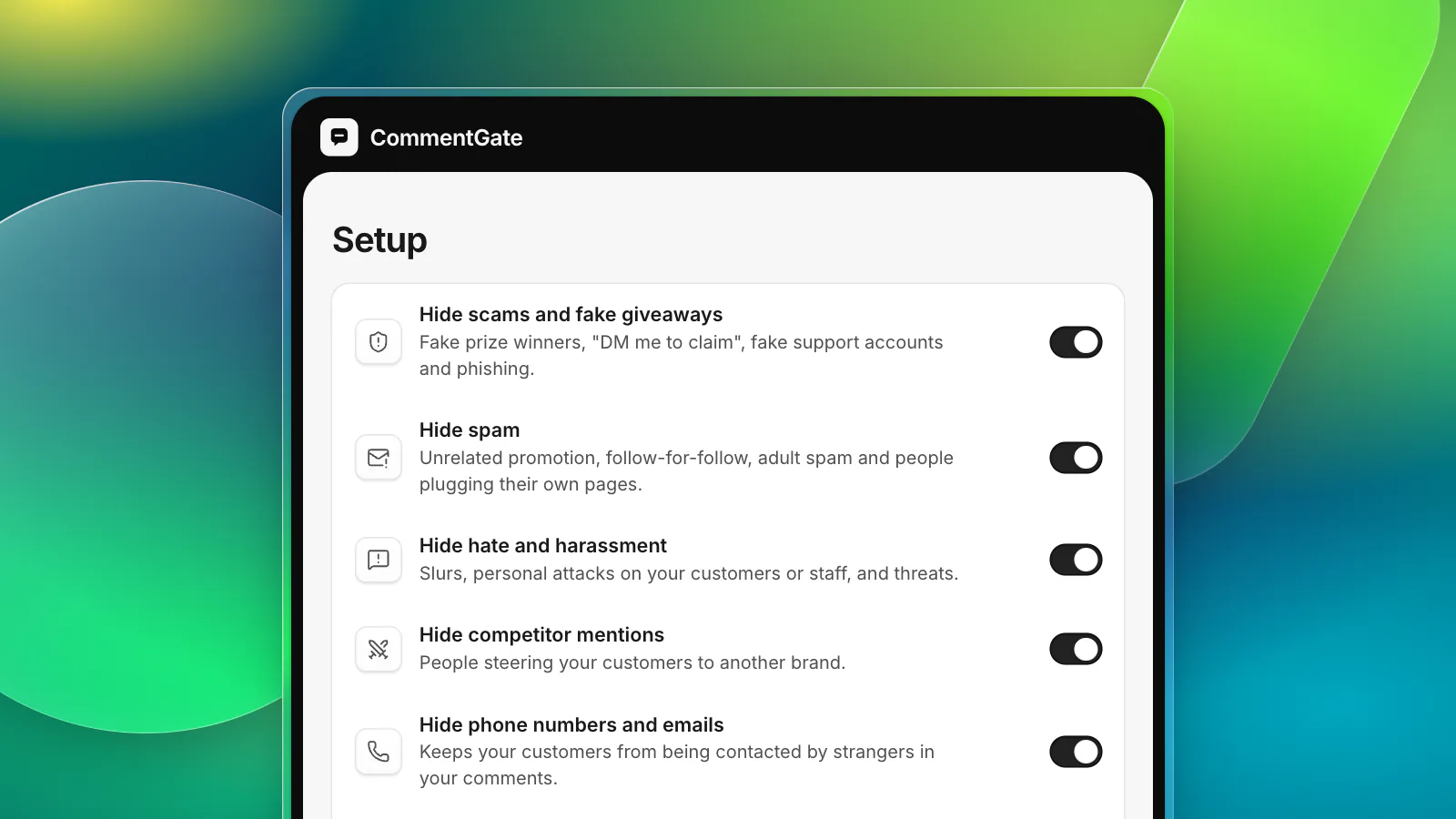
- Fake creator accounts and giveaway scams are hidden by Hide scams and fake giveaways, on by default. Add the creator's real handle to your trusted people so their own replies are never touched.
- Product questions get a drafted reply from your notes, where you are allowed to reply.
- Medical claims and partnership offers wait in Needs you with a one-line reason, because they deserve a person.
- Banter and criticism stay up. Hiding negative comments is off by default.
Creators can connect their own accounts, too; see CommentGate for creators. For the wider rules your team follows, start from the brand comment guidelines template and our influencer offer templates.