Moderating fairly: what to hide, what to leave, and how to stay consistent
Fair moderation is not soft moderation. It is the same rule for the same comment, whoever wrote it and whatever it says about you. Here is a neutral test for what to hide, what the FTC says about suppressing reviews, and the habits that keep a team consistent.
Guides 5 min read
On this page
Every brand that moderates comments eventually hears it: "You deleted my comment because you can't handle criticism." Sometimes it is a troll. Sometimes it is true. The difference between the two is not your intentions. It is whether you can show that the same rule was applied to everyone.
Fair moderation is not soft moderation. You can hide a lot and still be fair. What makes it fair is that the rule is about what a comment does, not about what it says about you, and that the rule does not change with the person on shift, the platform or the mood.
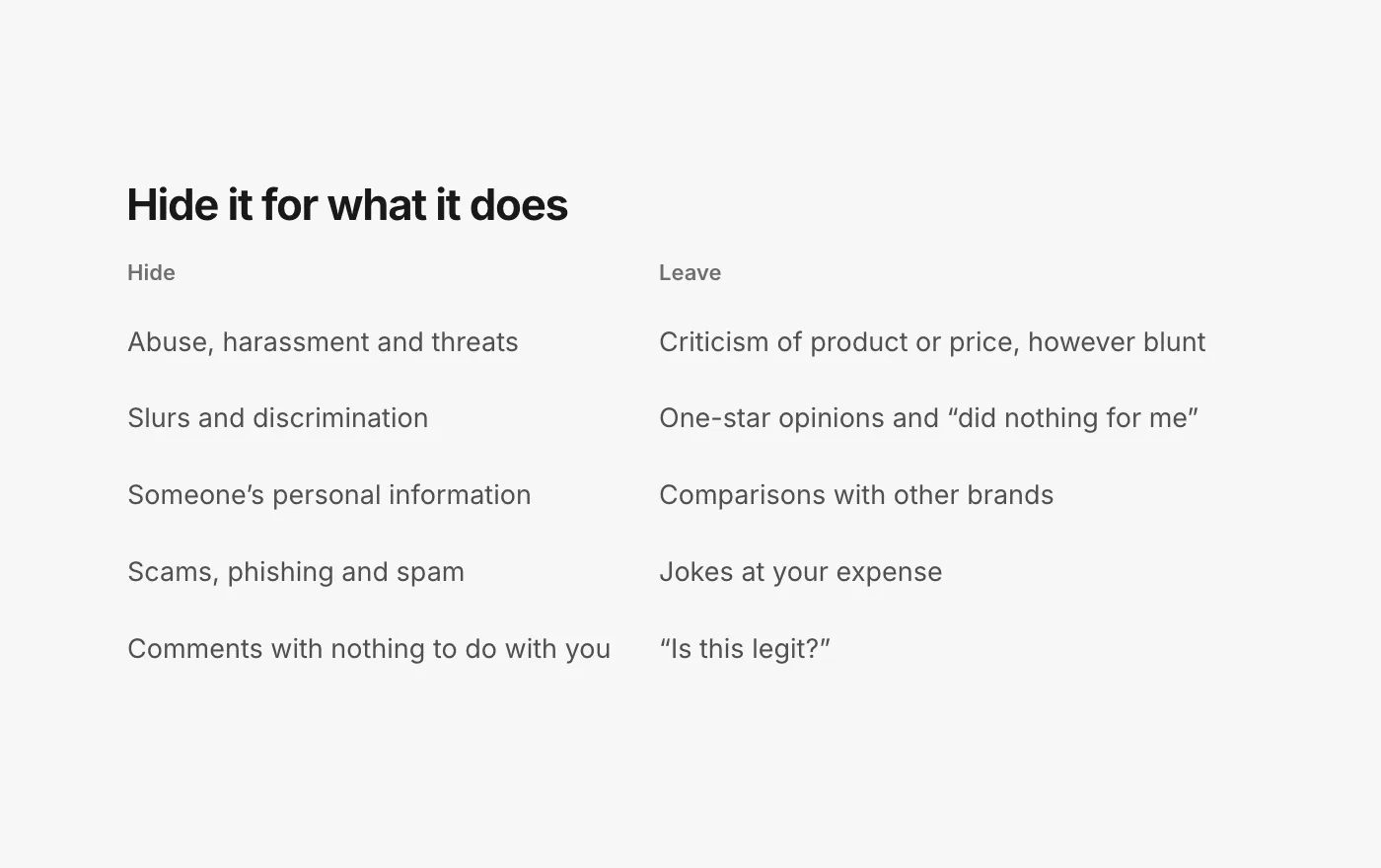
The test: what does the comment do?
Ask one question about every comment you are thinking of hiding: what harm does leaving it up do to the people reading it?
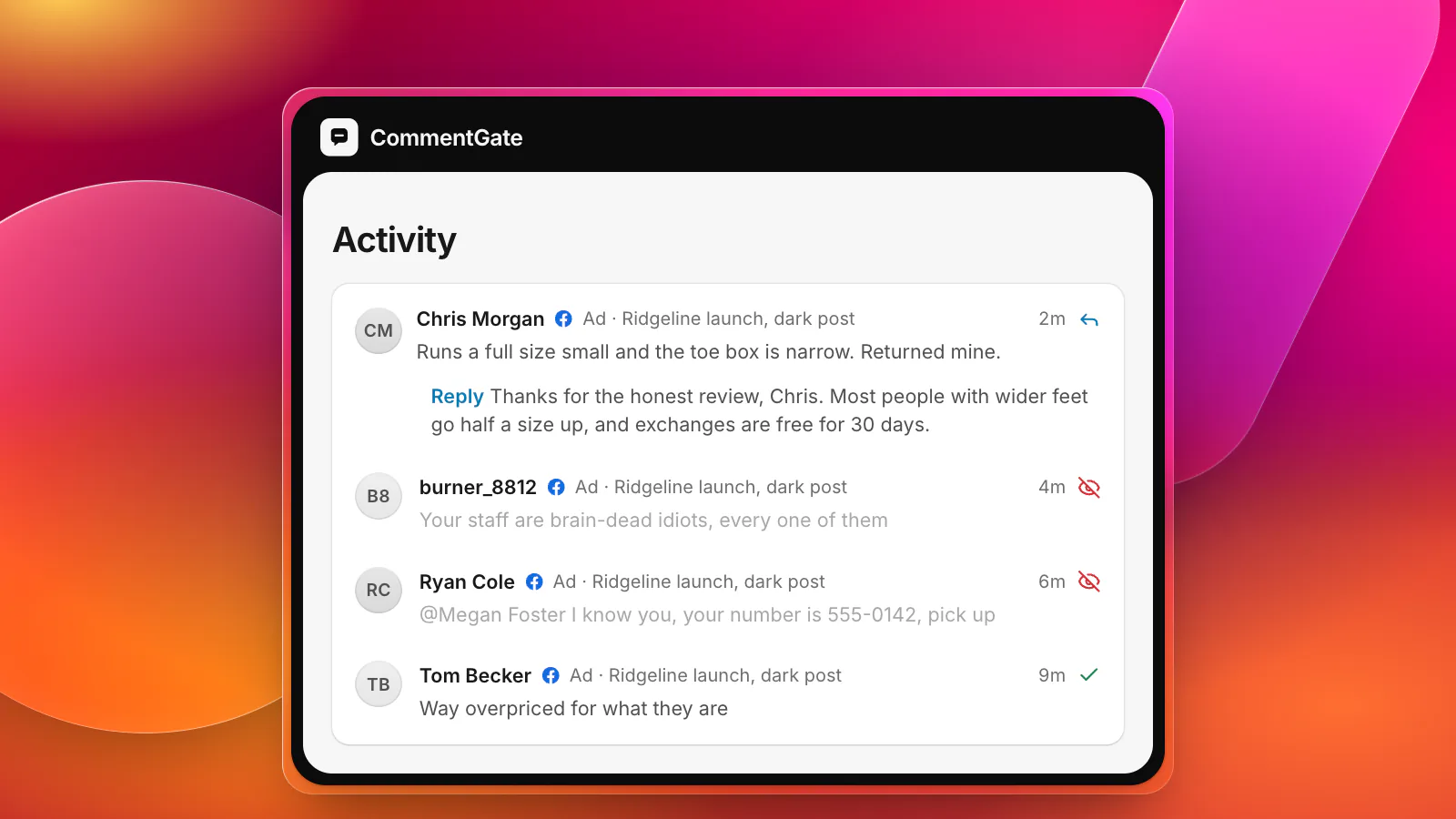
- It exposes someone's phone number or address. Hide.
- It sends readers to a phishing page. Hide.
- It attacks a person for who they are. Hide.
- It says your boots run small. That does no harm to readers. It helps them.
A comment can be rude, wrong, unfair and embarrassing, and still fail that test. Those comments get an answer, or nothing, but they stay.
A neutral list you can borrow from the FTC
The FTC's Rule on the Use of Consumer Reviews and Testimonials, in effect since October 21, 2024, bars a business from misrepresenting that the reviews it displays represent most or all of the reviews submitted when reviews are being suppressed "based upon their ratings or their negative sentiment" (FTC: final rule, 16 CFR Part 465, FTC: rule questions and answers).
That paragraph is written for the reviews section of your own website or platform, not for comments under an Instagram ad. But it also lists the reasons for withholding reviews that do not count as sentiment-based suppression, as long as the criteria are "applied equally to all reviews submitted without regard to sentiment". It is one of the clearest neutral lists a regulator has published:
- "trade secrets or privileged or confidential commercial or financial information"
- "defamatory, harassing, abusive, obscene, vulgar, or sexually explicit content"
- "the personal information or likeness of another individual"
- "content that is discriminatory with respect to race, gender, sexuality, ethnicity, or another intrinsic characteristic"
- "content that is clearly false or misleading"
- reviews "the seller reasonably believes" are fake
- reviews "wholly unrelated to the products or services offered"
Put next to a typical brand's hide list (scams, spam, hate, harassment, personal information, off-topic promotion), it lines up almost exactly. Notice what is not on it: negative, critical, unflattering or one-star.
The FTC's Endorsement Guides make the broader point for all consumer reviews. In "procuring, suppressing, boosting, organizing, publishing, upvoting, downvoting, reporting, or editing consumer reviews", advertisers "should not take actions that have the effect of distorting or otherwise misrepresenting what consumers think of their products" (FTC: Endorsement Guides, 16 CFR Part 255).
Where brands slip
- Hiding complaints until they are answered. It feels tidy. The FTC's answer to a similar question about reviews is that delaying only the negative ones, "even just by a few days, could create a biased picture of a product at any given time" (FTC: Endorsement Guides, what people are asking). Answer the complaint in public instead.
- Hiding "is this a scam?" It is a buyer asking for reassurance, and the answer is some of the best social proof you will get (answering "is this legit?").
- Treating every mention of another brand as a competitor plug. "Just buy StrideCo, they're cheaper" posted by an account that only ever promotes StrideCo is marketing. "I have both and prefer StrideCo's fit" from a real customer is an opinion.
- Keeping the miracle stories and hiding the "did nothing for me". That distorts what customers think, and for health claims it compounds the problem (health claims in comments).
- Different rules on different platforms. A comment hidden on Instagram and left on TikTok tells readers the rule is whoever happened to be looking.
Answering "you deleted my comment"
When someone says you hid their comment:
- Check what happened. Was it hidden, by whom, and for which reason?
- If it was a mistake, unhide it and answer it. "You're right, that shouldn't have been hidden. Sorry. Here's the answer to your question."
- If it broke the rule, say which rule, once, calmly: "We hide comments that include other people's contact details. Happy to answer your question here."
- Never accuse them of being a bot or a competitor unless you know it. The same FTC rule prohibits a business from responding to a consumer review with "a public false accusation" made knowingly or recklessly, in an attempt to get the review removed (FTC: 16 CFR Part 465).
A short public version of your rules, a line or two on your site or in your profile, gives you something to point to. Our comment guidelines template and the free guidelines generator will get you there in minutes.
Habits that keep a team consistent
- Write the rule down before you need it, and give everyone who moderates the same page, including agencies and weekend cover.
- One reason per hide. If you cannot name which rule a comment broke, it stays.
- Hide, do not delete. Hiding can be undone. On Facebook, a hidden comment stays visible to the person who wrote it and their friends (Facebook Help: hide a comment); on Instagram, the person is not told (Instagram Help: hide comments).
- Block rarely. Block for repeated abuse or scams, not for one angry comment.
- Review a sample every week. Ten random hidden comments and ten kept ones. Would a stranger agree with every call?
- Keep a record of what you hid and why. It is your answer when someone says you silenced them.
How CommentGate keeps it consistent
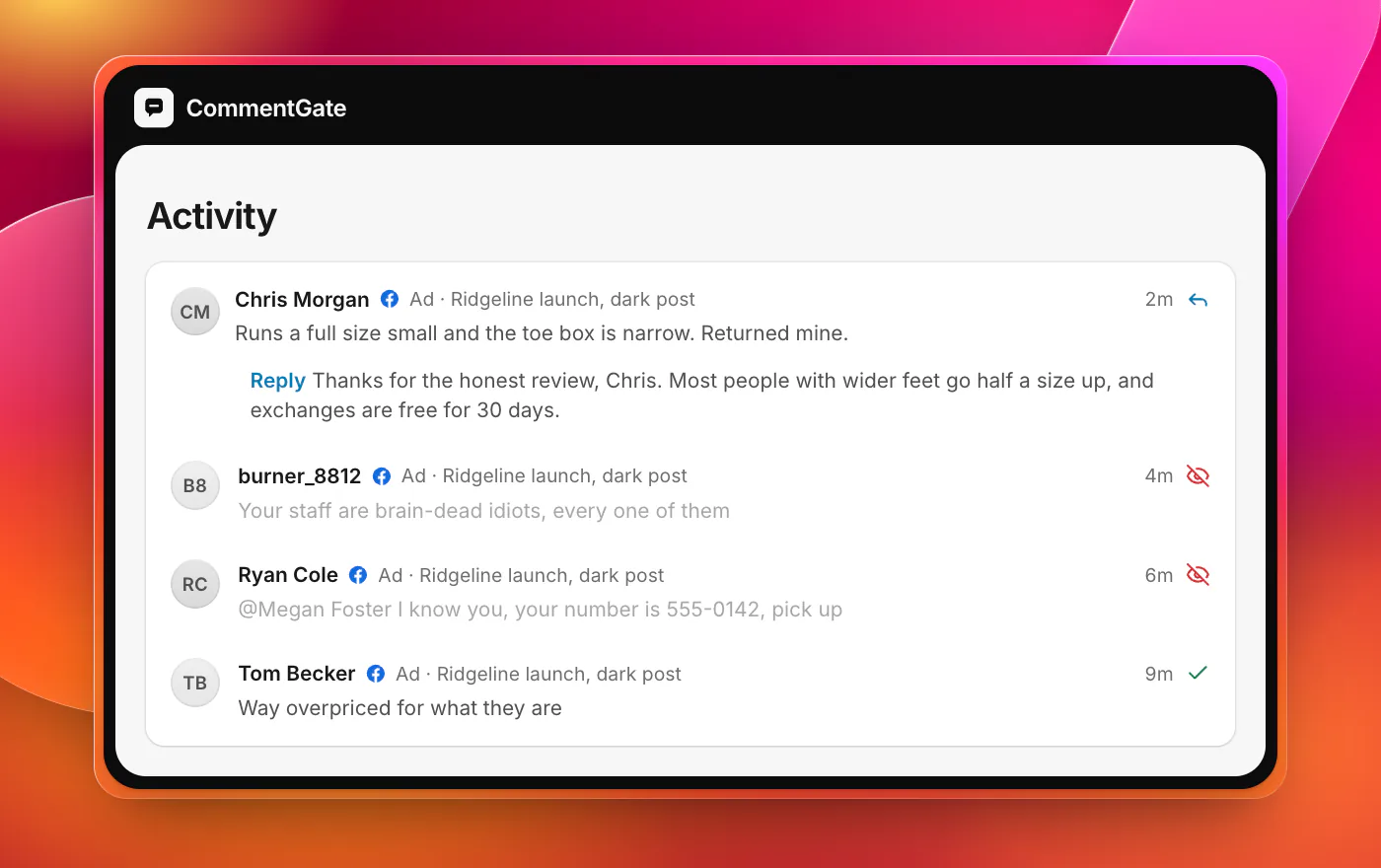
CommentGate is built around the same test:
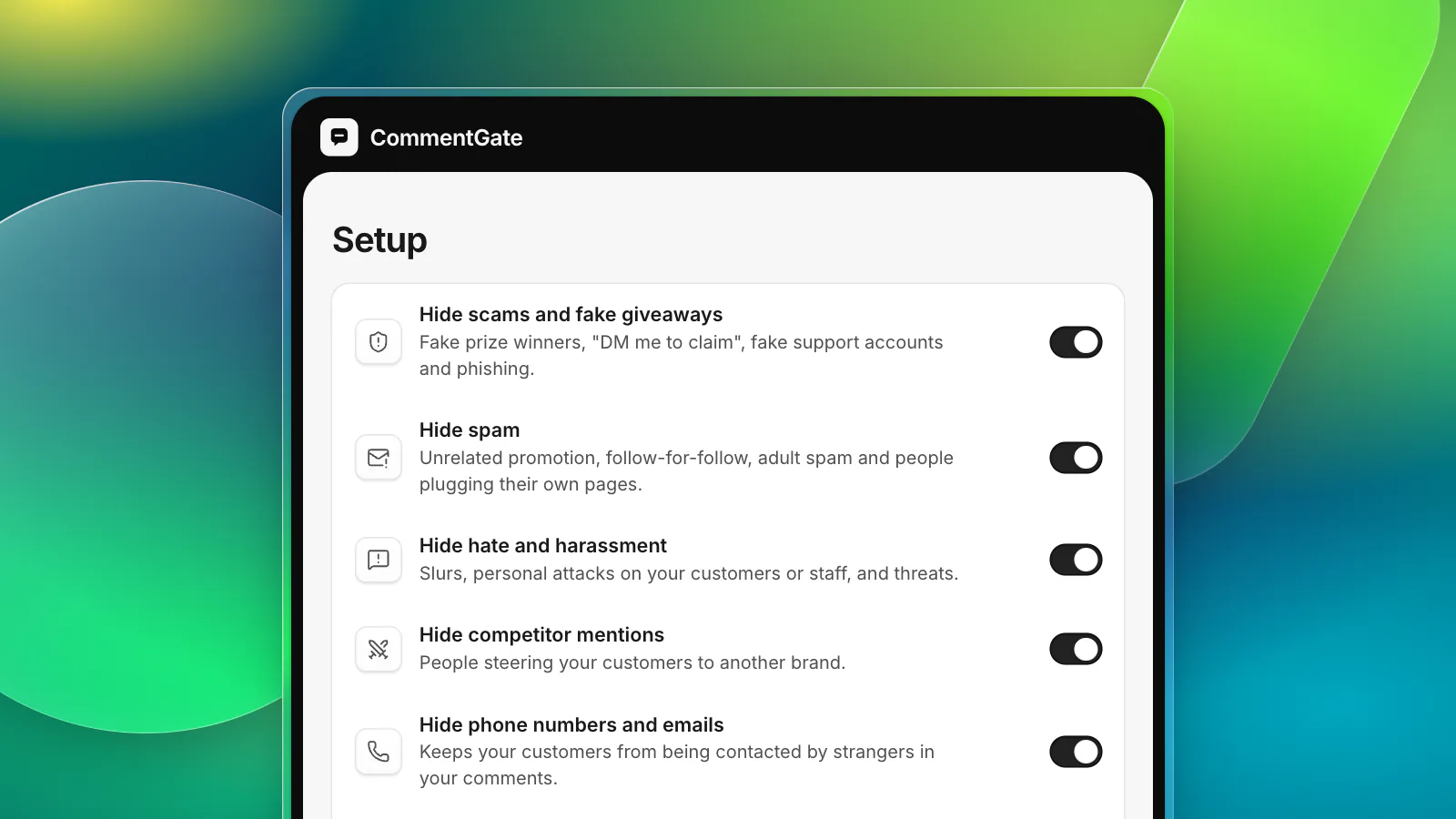
- Hide negative comments is off from the start. Scams, spam, hate and competitor plugs are hidden; criticism stays up, and questions inside it get a drafted answer.
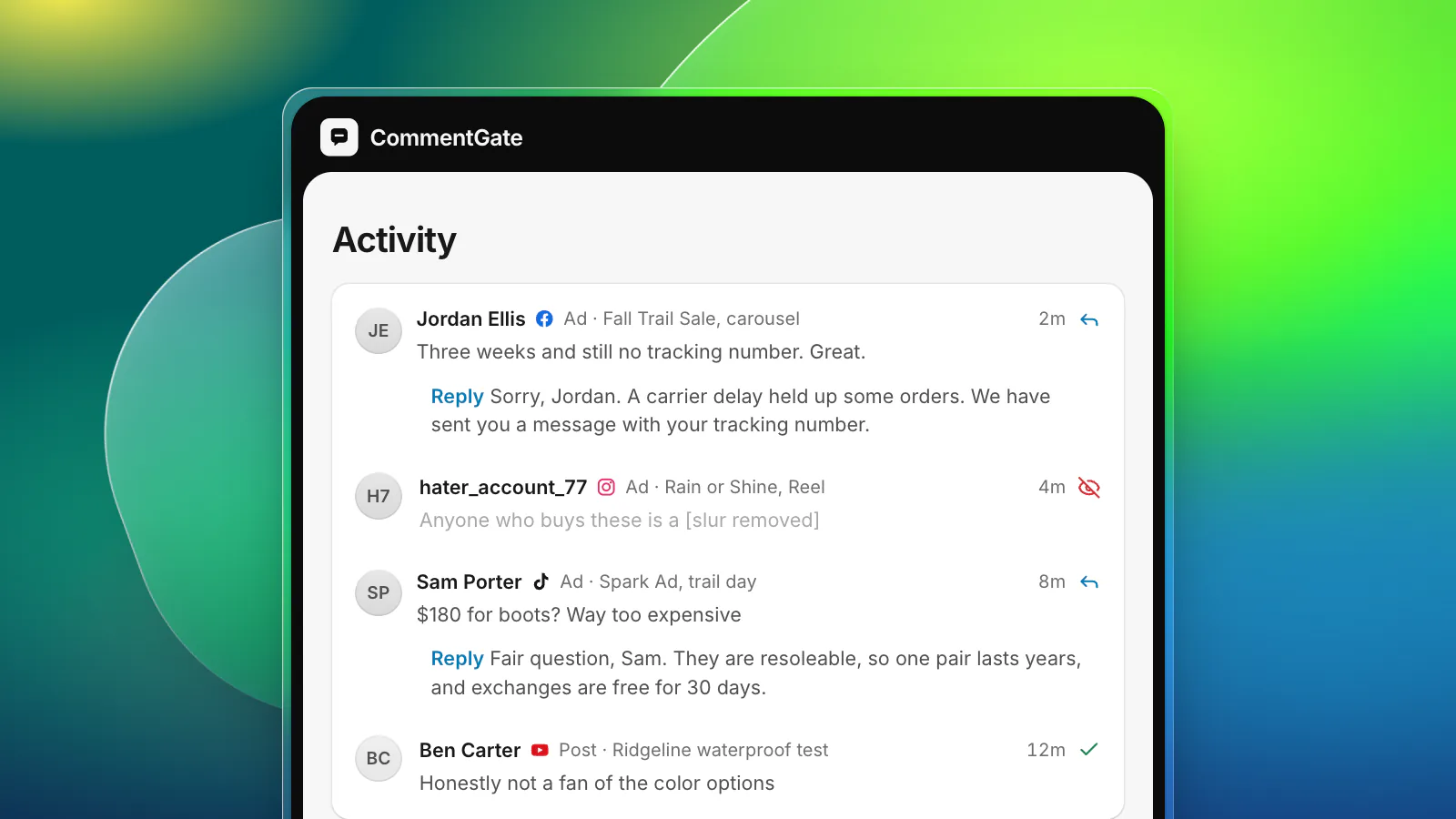
- Every hide carries its reason, and every comment keeps its full history: when it came in, what was decided, by whom, and every reply (team inbox).
- The same rules on every platform, for posts and ads, on Facebook, Instagram, TikTok, YouTube and Threads.
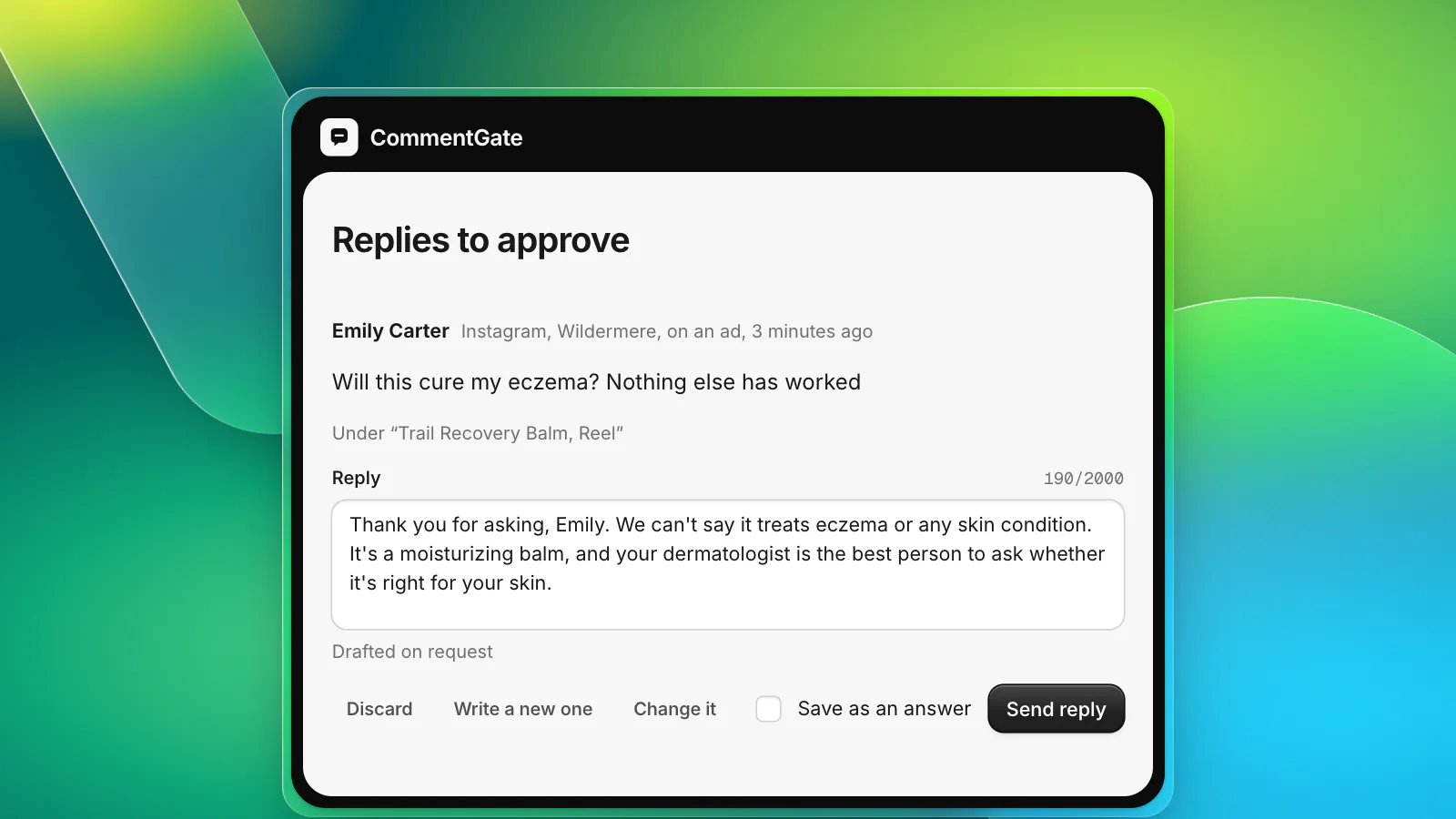
- The hard calls go to a person. Chargeback threats, safety reports and medical claims under ads wait in Needs you instead of being hidden on a guess.
- Test first. Paste any comment and see what would happen, and why, before you change a setting.
- It learns your line. Unhide something and CommentGate learns from the correction, so the same mistake does not come back.
- Export the record. Any view, or every comment on one post or ad, as CSV (reports and alerts).
Our guide to negative comments on ads goes deeper on which criticism to answer and which to leave alone.
Sources
- FTC: Trade Regulation Rule on the Use of Consumer Reviews and Testimonials, final rule (16 CFR Part 465)
- FTC: The Consumer Reviews and Testimonials Rule, questions and answers
- FTC: Guides Concerning the Use of Endorsements and Testimonials in Advertising, 16 CFR Part 255 (2023)
- FTC: FTC's Endorsement Guides, what people are asking
- Facebook Help Center: Hide or unhide a comment
- Instagram Help Center: Hide comments or message requests you don’t want to see